Friday, August 29, 2025

TV Station Owner Limits: To Be Lifted For Some, Not Others?


Commentary

TV Station Owner Limits: To Be Lifted For Some, Not Others?

The Trump Administration may be looking to lift the limit on TV station ownership -- where a company cannot own TV stations which collectively exceed 39% of U.S. TV households.

All this all seems predictable. But other stuff related to this possible move seems eye-opening.

Consider the Trump administration's different perspective when it comes to businesses -- like the Federal government taking a 10% equity stake in chipmaker Intel.

Reports say the Trump Administration via the Federal Communication Commission will lift the TV station ownership limit -- but only for independent TV station groups like Nexstar Media Group, Sinclair Inc. and others, not for the big four broadcast TV-network based companies that also own TV stations.

Recently, Nexstar announced a $6.2 billion deal to buy Tegna, another major TV station group -- a deal that would put the combined company over the 39% limit.

Following news of the deal, company execs referenced the probability of the 39% limit being lifted.

Although the Trump Administration could be looking to keep the big four TV networks under the 39% cap, NBCUniversal says the law won’t allow it.

“The answer is no. Differential treatment of broadcast licensees based on their ownership has no basis in law or policy,” said Angela Ball, senior vice president of regulatory affairs of NBCUniversal Media, in a recent filing with the FCC.

Other recent reports reference President Trump accusing news programming on NBC, CBS, and ABC television networks of being “fake news” -- with the suggestion that the FCC should revoke the broadcast licenses of those TV station groups.

And if that doesn’t work, those stations should “pay BIG” for using the airwaves, per social media posts.

Without any evidence, Trump says 97% of the stories from the big four TV network-based companies they had aired about him were "BAD STORIES" and suggested they were an arm of the Democratic Party, according to NPR.

This comes after two Trump lawsuits were settled for $16 million, one each from Paramount Global (for CBS) and Walt Disney (for ABC).

For many this is all about putting pressure on news organizations for future content would be more favorable for the Trump Administration or the President personally.

Analysts say this is next level stuff for media businesses -- initially believing that trying to patch complaints/issues with Trump via minor monetary compensation would seemingly let them move on with their businesses.

It doesn’t appear that’s the case at all. Expect more legal filings to continue.

The bifurcation of TV-media ownership between one company and another seems to be just the start. What will TV advertisers do -- if anything -- with regard to these massive shifts?

Thursday, August 21, 2025

Leveling Up Through Uncertainty: How Gaming Delivers for Brands

 Will Gaming ads have an opportunity for local-direct business to capture consumers who may be bored of no new series from the traditional ABC, CBS, FOX and the CW..or Netflix, Hulu or Prime Video or Paramount ? Philip Jay LeNoble, Ph.D.

Commentary

Leveling Up Through Uncertainty: How Gaming Delivers for Brands

Economic uncertainty forces brands to rethink their marketing priorities, doubling down on essential channels to reach consumers where it matters most. At the same time, consumers are prioritizing what they consider essential, focusing their spending on necessities like food and household items while cutting back on discretionary spending. But gaming challenges what can be considered essential for brands and consumers alike.

Gaming Isn’t a Splurge, It’s a Stay-At-Home Staple

When money is tight, consumers rethink their priorities -- but entertainment remains non-negotiable. McKinsey reports that 67% of consumers plan to maintain or even increase their spending on home entertainment during recessions, prioritizing it over categories like home decor, electronics, and even personal care. When compared to other forms of at-home entertainment, gaming fulfills deeper emotional needs -- offering more connection, creativity, and escape that other forms struggle to match.


Showing up in spaces where gamers gather -- whether it’s in the games they play, around the gaming content they consume, or at the events they attend -- allows brands to reach a captive and increasingly receptive audience, ESPECIALLY as spend slows.

 The Ecosystem Provides Access for All 

The gaming world has never been more accessible. Free-to-play games across mobile, PC, and console platforms provide ample opportunities for exploration and entertainment without requiring a hefty upfront investment. For those with existing game libraries, "tackling the backlog" -- revisiting those already-purchased titles -- and searching online platforms for associated gameplay tips becomes an appealing way to engage in their passions while protecting their wallet. 

Gaming isn't just accessible for consumers, it's also accessible for brands with a range of media-ready solutions that range from programmatic ads and website takeovers to in-game integrations and custom experiences. 

 Gaming Solves Social Needs

As people cut back on expensive outings, gaming offers a valuable solution, providing a platform for friends and communities to come together online. Multiplayer games, online communities like Reddit, and media channels like Twitch, are platforms where millions already gather to play, watch and discuss their fandoms in real-time. 

Connecting with consumers on a deeper level via activations that acknowledge the cultural nuances around gaming fandoms and communities can build lasting brand affinity.

 Digital Indulgence Doesn’t Slow Down 

For those looking to indulge in treat culture, in-game purchases – known as microtransactions – are also available to enhance their experience with avatar skins or downloadable content. This behavior is remarkably resilient to financial pressures. Even if gamers have other financial commitments, like children or wedding planning, they’re likely to be buying accessories or in-game content.

Partnering with franchises to provide in-game content to consumers is a great way to get your brand in front of them in a way that adds value to their gaming experience.

 Get Your Brand in Gaming 

While recession planning amplifies the need for gaming activations, brands should always consider gaming an essential part of their ongoing marketing plan. With 79% of the global online audience gaming or consuming related content, a networked media experience isn’t complete until brands make an impact where their target consumer is living (and playing).


Why SAG-AFTRA's Ad Tracking Rule Should Be the Industry Standard


Commentary

Why SAG-AFTRA's Ad Tracking Rule Should Be the Industry Standard

For more than a decade, the U.S. advertising industry has been navigating a radical and unprecedented transformation. Industry standards and best practices around the creation, placement, and management of creative marketing assets are constantly being reshaped to align with the ongoing evolution and expansion of our digital media ecosystem. It's been a challenging journey, but one that continues to benefit immensely from the increasing adoption of standardized ad identifiers—the digital "bar codes" that track the distribution and performance of ads across multiple channels. 

The concept of standardized ad tracking isn't new; it’s been evolving for more than two decades, initially to improve the efficiency of processes for traditional media. However, as the way people consume media has changed, so has the purpose and importance of this tracking. With the rapid emergence of new digital display and streaming mediums, it became clear that ad identification had a much more fundamental role to play, both in easing the growing pains of rapid modernization and in shaping the future of U.S. advertising. 


The most recent evidence of this shift comes from SAG-AFTRA, the foremost American labor union for media professionals. Their recently ratified three-year Commercials Contract mandates the use of AD-ID codes in all creative assets that feature union talent. This decision speaks not only to the existing value of such systems but also to how essential ad identifiers have become in an industry defined by widespread fragmentation. In this complex landscape, accurately measuring campaign ROI is no longer negotiable for optimizing marketing dollars and safeguarding against economic headwinds. 

For example, as video and display ads are distributed across an ever-broadening expanse of digital platforms, the ability to accurately and consistently track an ad’s visibility and performance across multiple mediums is critical. For SAG-AFTRA, this ensures that everyone involved in the production—from actors to costume designers—is properly and transparently compensated for their work. Utilizing an impartial and independent ad identifier in the US ecosystem enables trust and transparency in the calculation of residual payments, providing resolution to a major pain point. 

The centralization of cross-media campaign metrics makes it far easier to guarantee fair compensation and streamline compliance with union contracts. However, this strategic transition away from elusive, siloed data and toward standardized, trackable creative assets isn't just about fairness and transparency; it's the core component in a much more far-reaching evolution of how the advertising industry operates. 

The standardization of tracking and measurement translates to a wide range of business advantages, including improved operational efficiency, smarter planning, and an enhanced ability to influence purchasing decisions based on dynamic, data-driven insights into consumer behavior. Perhaps most importantly, standardized ad identification is the key to unlocking the comprehensive, cross-channel performance analysis needed to prove ROI and optimize budget allocation in today's complex media ecosystem. 

Economic volatility and uncertainty are top concerns among marketing professionals. A recent report from the Interactive Advertising Bureau revealed that 94% of advertisers are worried about how economic shifts will impact ad spend. This concern is understandable when you consider that a constantly evolving digital media landscape has made marketing dollars more vulnerable to waste than ever before. The ANA reported an astonishing $20 billion in waste associated with global programmatic advertising in 2023, much of which can be attributed to data access and transparency issues. 

Simply put, demonstrating ROI is becoming both more urgent and challenging. Previously straightforward questions about how, when, where, and how frequently ads are being delivered are almost impossible to answer without standardized tracking and measurement solutions. And while the adoption of these solutions continues to grow, with a boost from renewed mandates like SAG-AFTRA’s, there is still room for improvement. For instance, a recent audit of NBCUniversal found that only 15% of the media giant’s digital creatives were tagged with standardized identifiers. This generated discussion about their strong recommendation that creatives contain an ad identifier, which would allow them to better manage their own ad inventory and provide a better experience for viewers. 

Still, the advertising sector remains on a healthy trajectory toward modernization. Moving forward, increased industry collaboration, as well as continued compliance with requirements like SAG-AFTRA’s, should help accelerate widespread adoption among U.S. advertisers. This will allow them to more effectively streamline creative workflows, optimize performance, and maximize ad revenue across all campaigns. 

How can we as an industry work together to make universal ad tracking the mandate, not the exception

MSNBC's Name Change: Will There Be Regrets?


Commentary

MSNBC's Name Change: Will There Be Regrets?

MSNBC is changing its name to something that may have viewers, business partners and business analysts scratching their heads: MS NOW. It stands for My Source New Opinion World. 

Will this hurt viewership and its business prospects?

NBC says this is not an easy decision to make. Plenty of debate and discussions evolved in getting this result, according to executives. You can see the struggle.

Under the new Versant group of spinoff NBC cable TV networks, some analysts are sure to believe that MSNBC will be dinged.

Consider advertising brands currently buying into MSNBC.

Many deals -- but not all -- have been part of an overall NBCUniversal advertising packaging of similar news-oriented content, including “NBC Nightly News,” “Dateline,” “Today,” CNBC, the daily business TV network, NBC News Now, and other properties.


Going for separation now exists for some pieces of continued bundling for MSNBC. Soon after the initial spinoff announcement, NBCUniversal struck a two-year deal with Versant group to continue to sell advertising under its One Platform banner.

So then what was the key deciding argument for the change? NBCU is not pointing in a specific direction. Perhaps history can help us out.

Back in 2005, Microsoft made a decision to pull out its equity stake in MSNBC -- the "MS" part of the MSNBC brand name references Microsoft and its joint venture with NBCUniversal when MSNBC was initially launched in 1996.

It was decided in 2005 that although Microsoft would not be a partner, executives believed they could keep the network's name because it was an established media brand.

The change to MSNBC will not be made to its sister network CNBC -- partly due to the logic of its initial start, where it was referred to as the "Consumer News and Business Channel."

The bottom line, according to Versant CEO Mark Lazarus, was that because “our brand requires a new, separate identity” it should pursue its own course.

That might not sound convincing enough in a fast-moving legacy TV/streaming world.

Look at what Warner Bros. Discovery recently did with its five-year-old premium streaming service. At launch in 2020, it was called HBO Max. But then, with WBD's executives believing the service was more than just HBO content -- Discovery Channel, HGTV, CNN and others being included -- the company dropped the "HBO" moniker part in 2023, leaving it to become just "Max."

But now in a tougher streaming marketplace, it believed that was a mistake as well. The topline "HBO" name carries way too much marketing punch, and the platform returned earlier this year to HBO Max.

Creating established and thriving media brands is a hard enough job. Alternating a brand name -- even a little -- can be harmful.

Look at one established social media brand. While questionable senior management moves and social media posts should be factored in, maybe ‘X’ shouldn’t have changed from ‘Twitter’.

Changing MSNBC to a vague, less-than-impactful MS NOW, might seem to suggest more of a possible fumble: MS MISS?

Multiview' Screen Channels: Promote, Deep Viewing... Or Headaches?


Commentary

'Multiview' Screen Channels: Promote, Deep Viewing... Or Headaches?

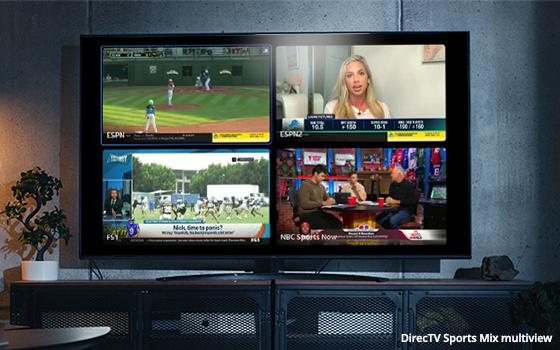
DirecTV is upping its intensity when it comes to giving viewers more choice and more access points -- for those who need more places to figure out what they want to watch. It is adding seven more “multiview” channels.

Is that a good idea?

DirectTV has had this multiview technology for over 20 years. These are places where on one single screen you can watch up to four live programs at the same time. There is also the ability to toggle around those screens, hit "enter," and head to that channel for a single view.

DirecTV is adding seven of these channels with different network genre emphasis -- a general sports channel (ESPN, ESPN1, NBC Sports, FS1) as well as one for sports leagues (MLB Network, NBA TV, NHL Network, NFL Network).

There is also a “News Mix” one -- including CNN, Fox News Channel, Fox Weather, MSNBC; “Business Mix” (Bloomberg Television, CNBC, Cheddar News, Fox Business), and “Kids Mix” (Disney Channel, Disney Jr., Disney XD, Nickelodeon).


And if that isn’t enough it has a “Local Mix” -- where local TV stations affiliates can be viewed.

And just in case you need more sports channels to consider, there is a “Sunday Sports Mix” (CBS, Fox, ESPN and FS1), starting September 7.

Considering its long-time effort here, DirecTV must have collected lots of data when it comes to its usage.

It would be interesting to see how viewers are using these channels these days -- especially if viewers are also holding phones in their hands.

Since the dawn of pay TV network bundles in the late 1970s (cable, satellite, telco) all operators have provided different versions of these "promotional" channels to boost interest.

Now, decades later -- with way more digital screens to consider for some modern consumers -- and consumer focal points getting more complex -- what's the value now for networks and consumers?

This comes as DirecTV has been re-constructing its TV network bundles -- offering more variations on a theme when it comes to lower-cost channel packages with different combinations (MySports, MyNews, MyEntertainment, MyKids, and Signature).

What’s next for multitasking growth? I only have two hands and two eyes and two ears.

Still, cognitively, I’m up for any media challenge. Bring it!

Friday, August 15, 2025

Inputs Vs. Outputs, And Nielsen's New 'Outcomes Marketplace'


Commentary

Inputs Vs. Outputs, And Nielsen's New 'Outcomes Marketplace'

More than a century after Arthur C. Nielsen launched a company to measure media exposure to consumers -- and increasingly, how it affects them -- his namesake company is once again elevating the role of outputs in its products and services to advertisers, launching what it is dubbing an "Outcomes Marketplace" that will combine Nielsen's proprietary data with those of other marketing and media researchers to offer advertisers and agencies with "a more comprehensive view of an ad’s outcome alongside reach and frequency data."

The move obviously has implications for media planners and buyers, as well as their clients, but it also raises new questions about what the inputs and outputs of media measurement actually are.

The move comes a week after a former division of private equity-owned Nielsen that explicitly measured outputs like sales lift and conversions -- Nielsen IQ, now NIQ -- began trading as a public company on the New York Stock Exchange, reminding me of a long history of the companies' split-ups, reintegrations, private and public offerings over the century of their existence.


Company historical footnotes aside, Nielsen's announcement this morning raises additional questions about what media measurement inputs are vs. outcomes, announcing that its first third-party Outcomes Marketplace partner is Realeyes, a company known for measuring the attention consumers pay to media and advertising.

In the brief modern history of ad industry outcomes measurement standards -- the Media Rating Council's September 2022 "Outcomes and Data Quality Standards," attention metrics are not listed as "measurement of delivery and exposure," not outcomes, which the MRC standards describe as things like lead generation, requests for information, sales lift, brand lift, conversions, etc.

To that end, Nielsen executives say the outcome measurement portion of the Realeyes partnership will come from pairing Realeyes' data with Nielsen's own, proprietary snapshots of brand and sales outcomes metrics in the marketplace.

What's not clear from this morning's announcement is whether future Outcomes Marketplace offerings will be generating outcome metrics solely from Nielsen's data, or from the other third parties it is partnering with.

Nielsen has not disclosed other Outcome Marketplace partner plans, but its announcement this morning does include a quote from Krishna Subramanian, the CEO of influencer marketing platform Captiv8, which big agency holding company Publicis acquired earlier this year.

"Nielsen’s attention metrics raise the bar for influencer marketing," Subramanian says, adding, "We’ve always pushed for deeper, more meaningful measurement and now we can go beyond surface-level metrics to show real campaign impact."

Nielsen's move also comes as big agency holding companies like Omnicom, WPP, Publicis and others have been investing deeply in their own, proprietary outcomes-based measurement data, especially Omnicom's big acquisition of Flywheel a couple of years ago, indicating that from their point-of-view, the future of planning and buying is more about owning elite outcome data sets than licensing it from others.

That said, Nielsen says its new Outcomes Marketplace will "announce more best in class outcomes measurement providers later this year that will deliver metrics across the full spectrum of campaign performance, including ad engagement, audience attention, brand perception shifts, and sales conversions."

I look forward to covering those, as well as any new outcomes measurement deals, products and services coming from other industry suppliers. Maybe even NIQ?

In Pod We Trust, Nielsen Fuses Edison Data into Media Planning


Commentary

In Pod We Trust, Nielsen Fuses Edison Data into Media Planning

It's been nearly a dozen years since Nielsen acquired radio audience measurement service Arbitron, and rebranded it as "Nielsen Audio," and a lot has changed in both the audio media and how it is measured, including a long pattern of collaboration between Nielsen and another highly-regarded, independent research entity Edison Research.

To illustrate that point, Nielsen and Edison this morning unveiled yet another new collaborative product, the "Nielsen Podcast Fusion powered by Edison Research."

For those planners and buyers who are not technically-inclined bout media audience measurement methodologies, a fusion is a method in which two different survey-based research suppliers integrate their data at a fundamental level -- usually by "hooking" the common attributes of respondents in their separate surveys to extrapolate how respondents in one survey correlated to the characteristics of respondents in the other.


If that sounds like a leap of faith, it is generally considered a sound media research method, if done right. And we have to assume that companies like Nielsen and Edison wouldn't do something that's not right.

Also, keep in mind we are now entering a world in which far less sound methods -- including synthetic, AI-generated respondents are not posing as actual consumers to yield fast, hard-to-get responses. More on that another time.

As far as the new Nielsen/Edison fusion goes, it's hard to understand what explicitly is under the hood based on this morning's announcement, but at least two pedigree podcast media companies -- NPR and Ocean Media -- have signed on as charter subscribers, so that says something.

Beyond that, the companies say the new collaboration will fuse Edison's "Podcast Metrics" database with Nielsen's "Media Impact" media planning tool, so at the very least, it shouldn't be a heavy lift or big learning curve for planners and buyers already familiar with using that. It will just include a new, ostensibly better source of information about actual podcast listenership.

Among other things, that fusion will enable advertisers and agencies to compare and plan podcast alongside TV, radio, digital and social media buys, making for a more holistic process than dabbling across disparate databases.

According to this morning's announcement, that's an important development because podcasts now account for nearly a third (32%) of the entire ad-supported audio marketplace.

For background, this is not Nielsen's and Edison's first rodeo together.

Nielsen already markets Edison's "Share of Ear" and "Podcast Metrics" reports and the two companies publish the quarterly "The Record" report.