Monday, November 25, 2024

Spin Zone: Inside Comcast's Head-Spinning Spinoff Plan


Commentary

Spin Zone: Inside Comcast's Head-Spinning Spinoff Plan

It’s the spinoff to end all spinoffs as Comcast spins off its cable networks into a company called SpinCo.

The name is so generic that it seems like an afterthought. Also, some might mispronounce it and think it rhymes with “stinko.”

Plus, it conjures related words such as “tailspin” and “spin zone.” On the latter subject, here is how Comcast spun the story in its announcement last Wednesday that it was spinning off its basic cable networks (except Bravo) into a separate entity.

“SpinCo will be an industry-leading news, sports and entertainment cable television business with a focused strategic direction,” the press release said.

“SpinCo’s stable of marquee brands will provide a diverse and differentiated content offering that will reach approximately 70 million U.S. households,” it said.

“Hope is a good thing,” wrote Andy Dufresne (Tim Robbins) to his prison friend Red (Morgan Freeman) in “The Shawshank Redemption.” 

But hope alone might not be enough for Comcast to fulfill its goal of “future growth” in the basic-cable space.

“When you look at our assets, talented management team and balance sheet strength, we are able to set these businesses up for future growth,” said Comcast Chairman and CEO Brian Roberts in a prepared statement.

“Taken together, the entirety of NBCUniversal will be on a new growth trajectory,” said Comcast President Mike Cavanaugh.

“We see a real opportunity to invest and build additional scale and I’m excited about the growth opportunities this transition will unlock,” said Mark Lazarus, currently chairman of NBCUniversal Media Group, who has been named CEO of SpinCo.

The key word from the prepared statements is “growth.” But that’s a word few in the TV business today associate with the words “basic cable.”

The NBCU cable networks that are headed to SpinCo are CNBC, E!, Golf Channel, MSNBC, Oxygen, Syfy and USA Network. The outlier is Bravo, which is staying in the parent-company fold. 

Of particular interest is the inclusion of MSNBC (featuring the weekday show “Morning Joe,” pictured above) and CNBC on this list of cable channels to be spun off.

It is one thing to jettison low-rent channels such as Oxygen and E!, which are literally gasping for oxygen. But MSNBC and CNBC are well-known brands, and news brands to boot.

Either they have been included to prop up the other channels in the SpinCo portfolio, or Comcast considers them to be on par with the other ones it is spinning off. 

The spinoff plan represents a turning point in basic cable. To the TV Blog, it represents a realization leading to a conclusion on the part of Comcast that its basic-cable properties actually have little or no potential for growth and by separating them out, they are now left to sink or swim on their own.

Growth would be great, but it is difficult to see how that can be achieved, given the headwinds everyone talks about.

Most notable among them is cord-cutting, with which millions are saying they do not want or need basic cable anymore, since streaming serves their needs better and cheaper.

In addition, these basic cable channels have been in decline for years to the point where they now seem merely as placeholders clinging to life and their channel positions.

The decline has been noted and chronicled here many times. “As one who grazes through my basic cable channels frequently, the thought often occurs to me that I am literally witnessing an industry in its death throes,” I wrote four years ago this month.

“Here’s a theory that perhaps can be applied to the whole world of basic cable at this moment in its history: Cord-cutting is a reality that shows no sign of ebbing or plateauing,” I wrote last February.

“Thus, this theory continues, the majors are keeping some of these basic channels on a kind of life support until such time that they are not viable at all.”

The cycle of decline goes like this: Content deficiencies lead to audience erosion that leads to depressed ad rates and then results in interminable commercial breaks with commercial loads that drive away even more viewers.

Non-scripted content on basic cable looks cheaper every day, and development of original scripted content on basic cable has all but come to a halt. 

SpinCo will have its hands full. Comcast says the transitioning of its cable networks into the new company will take about a year.

NFL Thanksgiving Ad Price Soars 16% To $1.45M Per :30


NFL Thanksgiving Ad Price Soars 16% To $1.45M Per :30

Next Thursday’s NFL Thanksgiving games are seeing a 16% rise in 30-second unit pricing to an average $1.45 million on NBC, Fox and CBS, according to Guideline’s Forward Bookings data.

This is around three times the unit pricing of non-Thanksgiving NFL games this season. A year ago, NFL set a record of 34.1 million viewers watching Thanksgiving games.

In addition, Guideline says, pricing for Thanksgiving weekend games on Saturday and Sunday is 11% higher to $576,000 for a 30-second unit.

Thanksgiving weekend sports programming (Thursday, November 28, and Sunday, December 1, 2024) is currently at $570 million in total ad revenue on U.S. broadcast networks -- including Amazon Prime Video’s Black Friday NFL game.

When adding other sports content on cable, the total climbs to $624 million.

In addition to NFL games, at least 14 college football games will air on broadcast and cable. Thirty-second college football games on the Saturday of Thanksgiving weekend on ABC, CBS, Fox, and NBC have climbed 12% to $133,000.

Overall sports programming will account for at least 84% of all broadcast dollars during the holiday weekend, with NFL games accounting for 69% of all ad spending, says Guideline.

Guideline's Forward Bookings data represents ad spend that has been committed by its contributing agency partners for upcoming, yet-to-run inventory.

Guideline, which owns Standard Media Index, Lumina, and SQAD, captures actual agency invoicing data from all major holding companies and most major independent media agencies.

Jeep Returns to Super Bowl

 Here's an update to visit with your local-direct automotive to gain more consumer traction before the New Year hits: Philip Jay LeNoble, Ph.D.

automotive

Jeep Returns to Super Bowl


LOS ANGELES -- Stellantis’ Jeep brand will be back on the Super Bowl next year, according to its top executive.

Bob Broderdorf, head of the Jeep in North America, confirmed the upcoming spot during the automaker's presentation to media at the Los Angeles Auto Show last week. 

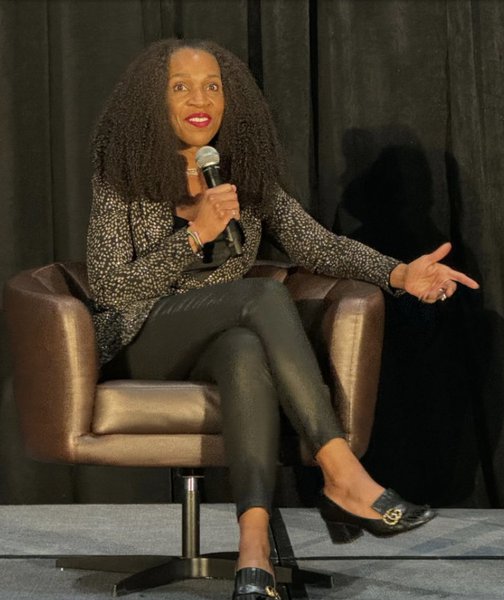
During an on-stage interview at MediaPost’s Marketing: Automotive conference, Stellantis’ Rajoielle “Raj” Register said the automaker is engaging in its famous “jump ball” approach to choosing an agency for the spot.

“What it does is, it makes you bring your best self every single time,” says Register, who is senior vice president and chief marketing officer, North America, Stellantis.”And when we do things like Super Bowl or other large campaigns, it gives many agencies an opportunity to give the best idea. 

“And with that being said, you can't just come with status quo or something that you brushed off from five years ago,” she says. “You have to have something new, fresh and exciting. It's done in a respectful way, but it's an opportunity to give us so much runway to have not only a great idea for now, but sometimes it's something where we say, ‘Hey, that might not be right for this thing, but we can use it for this other thing.’”

The approach also prompts the automaker’s internal team to step up its game, she says.

“You have to make sure you have the best story, the best angle, the best creative,” Register says. "And it's something that I say causes a little bit of churn in certain regards, but it gives us a great amount of respect once we see how things come together.”

The iconic SUV brand was last on the Big Game in 2023 with “Electric Boogie,” created by Chicago-based agency Highdive. The 60-second spot featured species from across the animal kingdom dancing along to "Electric Boogie," which remains a pop culture music staple decades after being released.

Stellantis, which often places multiple spots on the Super Bowl, sat out the game last year due to financial constraints. Fox is reportedly selling 30-second ads for at least $7 million each on Super Bowl LIX, which is Feb. 9.

Register also gave the audience a sneak peek of a rough cut for an upcoming Dodge campaign for its electric Charger sports car, which is set to break in early December. 

The tongue-in-cheek spot pokes fun at the high-horse approach many electric vehicle spots take. 

"What I've noticed in the industry is many of the EV campaigns look very, very similar," Register says. "And when we think about the opportunity we have with Dodge, we are not losing the grit and soul of what that brand brings to market. The performance is better than the [gas-powered] vehicle, and why not have some fun with it? It is a Dodge that just happens to be electric, and that campaign is very spot-on to that particular core group."

It's Not TV, It's A New Framework for It


Commentary

It's Not TV, It's A New Framework for It


As someone who has covered the evolution of television technology for nearly half a century -- from broadcast to satellite/cable to digital and apps -- I'll confess that the way the advertising and TV industry segments confuses the heck out of me. In part, that's because different interest groups within the industry historically have different points of view on what variants represent and how much they should be counted, discounted and/or factored into the underlying currencies used to buy and sell the ad-supported parts and determine the effective reach and frequency of viewers when they do.

In other words, the whole framework was greatly in need of -- and frankly overdue for -- a reboot. That begins effective today with a call from none other than the Advertising Research Foundation (ARF), which has spent years calibrating and re-calibrating how Americans connect to TV in all its varied forms.

Dubbed DASH -- which is not exactly an acronym, but stands for "Universe Study of Device and Account Sharing" -- the multiyear research initiative has dug deep into the way American consumers access television and/or premium and ad-supported streaming service content, including overlaps and redundancies, in order to create a pure, objective view that the advertising and TV industry can use to calibrate the weights they use to measure the overall universe, or segments within it.

The project has largely been successful and DASH's periodic benchmarks have been utilized by various TV measurement and advertising currencies to calibrate their own universe estimates.

Effective with the release of a new study drawing from its spring 2024 research, as well as previous studies going back to spring 2022, the ARF is making the case for a new, simplified framework for categorizing how Americans connect with television.

You can read the ARF's entire white paper on the subject here, but I put together the pie chart above to give you a quick way of understanding the six forms of connectivity, as well as their relative current shares of U.S. television access.

As simple and elegant as the new framework is, it still requires some factoring to understand it, because there is still a bit of overlap in terms of the way average American households access television.

For example, the framework estimates five of the segments can be combined to produce a relatively pure-play "linear TV universe" comprising 74.4% of a greater universe, while four of the segments combine to comprise 59.0% of it.

I did say the approach still requires factoring, right?

This is partly due to the fact that there now are so many hybrid models of ad-supported, pay and combinations thereof being offered by platforms and apps, that you have to pick your poison and define the universe you want to use to frame what you consider television to be. Linear vs. pay is how the ARF is recommending it.

I mean, look at the DASH report chart below and you can see just how blurry the lines are becoming. Between its 2023 and spring 2024 studies, DASH found that the SVOD (subscription video-on-demand, ie. premium streamers, etc.) declined from 35% of the pie to just 15%, while there was a corresponding jump in the shares going toward AVOD (ad-supported video-on-demand) as well as a "mix."

Personally, I would have gone with ad-supported vs. pay, but I'm not sure the ARF -- even with years of DASH data -- knows how to estimate exactly that. And if they do, why didn't they include it as an alternate way of segmenting the medium in the new framework?

I'm sure some of you will want to comment, explain and or speculate on the resulting solution, so have at it.

Meanwhile, I'll just conclude with a quote from ARF Chief Research Officer Paul Donato, who is the chief architect on the whole project:

“As the lines between traditional pay and streaming services continue to blur, we’re moving toward a new paradigm that will more accurately represent how households connect to television.”

Thursday, November 21, 2024

Automotive TV Spending Up Nearly 29% In October


Automotive TV Spending Up Nearly 29% In October


Automakers spent an estimated $399.1 million on national TV in October, up 28.9% year-over-year. 

The year-to-date spending ($2.1 billion) was up 4.3% compared to the same period in 2023 ($2 billion), according to iSpot.tv. 

Meanwhile, household TV ad impressions were down 23.8% in October to to 21 billion compared to 27.6 billion a year-ago. Year-to-date impressions are also down 13.9% year-over-year (231.2 billion vs. 268.4 billion for the same period in 2023. 

The top five brands by estimated national TV ad spending for the month were Honda ($47.2 million), Ford ($37.9 million), Jeep ($36.9 million), Hyundai ($33.6 million) and Chevrolet ($29 million), per iSpot.tv.

The most-seen automaker ads by share of household TV ad impressions in October 2024 were Ram Trucks: "The Calling: Blessed "(3.76%), Honda: "Unstoppable Dreams" (2.78%), Mercedes-Benz: "SUV for U" (2.27%), Hyundai: "Drive-In, Drive Easy" (2.15%) and Subaru: "The Moment" (2.09%).

With a month that included NFL and college football, the MLB postseason and World Series, and the NBA season tip off, sports accounted for an overwhelming majority of automaker spend. 

All the top five brands invested heavily in the NFL. Jeep leaned in the most, with over 87% of its total October outlay going to games. The MLB and college football were other top focuses for all five automakers, as well as the NBA, but to a somewhat lesser extent (plus the season didn’t start until late October).

“During a busy sports month, automakers focused investment accordingly to get in front of the largest audiences TV had to offer,” says Stuart Schwartzapfel, executive vice president, media partnerships at iSpot.tv. “But in the lead-up to election season, news programming also provided significant reach, especially in primetime, for the brands willing to drive down that road.”

The top five brands by share of automaker household TV ad impressions in October were Hyundai (8.86%), Lexus (8.42%), Toyota (7.81%), Ford (7.70%) and Chevrolet (7.18%).

The top five brands by share of voice on streaming for the month were Hyundai (10.90%), Ram Trucks (9.45%), Ford (7.18%), Toyota (6.91%) and Lexus (6.66%).

Ram Trucks put a greater emphasis on streaming over national linear from a reach SOV standpoint in October 2024, with it ranking sixth for linear SOV but second for streaming. And compared to October 2023, Ram Trucks, Hyundai and Toyota all increased streaming SOV year-over-year, while Ford and Lexus had a smaller share this October vs. October 2023, per iSpot.tv.

The top programs for automakers by share of household TV ad impressions in October 2024 were NFL (19.26%), college football (14.29%), MLB (9.30%), NBA (1.32%) and SportsCenter (0.97%).

Sports delivered the widest reach for the automaker industry in October — but outside of SportsCenter, TV ad impressions were down for the top sports. 

The NFL saw a 23% decrease in auto impressions vs. October 2023. The MLB was down 22% year-over-year and NBA impressions slipped by 19%, while college football impressions declined by 14% vs. October 2023. SportsCenter saw auto impressions increase by 5% year-over-year, per iSpot.tv.

The top networks for automakers by share of household TV ad impressions October 2024 were NBC (14.90%), Fox (12.55%), ABC (8.28%), CBS (7.69%) and ESPN (6.33%).

All the top five networks saw a decrease in automaker impressions compared to October 2023. Meanwhile, The Weather Channel (which ranked No. 6 for industry reach), saw a 153% surge in impressions year-over-year, thanks largely to the increases around Hurricane Milton coverage. HGTV (No. 8 for automaker reach) had a 35% increase in impressions vs. October 2023, per iSpot.tv.

As part of iSpot's creative assessment survey, likeability measures an ad's ability to appeal to viewers, based on results from the survey prompt “I like this ad.” Positive Purchase Intent is the share of creative assessment survey respondents that indicated they were "more" or "much more" likely to purchase a product or service after seeing an ad.

The top automaker ads by likeability per iSpot.tv among the top 20 most-seen ads in October 2024 were Subaru: "National Make a Dog’s Day: Waiting" (+13.7% more like able than October automotive norm), Subaru: "Shelter Dog "(+9.1%), Lexus:"Free" (+6.2%), Jeep: "You Know: Middle of Nowhere" (+5.7%) and Ram Trucks: "The Calling: Blessed" (+3.4%).

The top automaker ads by positive purchase intent among the top 20 most-seen ads during the third quarter of 2024 were GMC: "The Time Has Come" (55% positive purchase intent), Infiniti: "Audio Zones" (55%), Genesis: "Illuminated" (52%), Subaru: "National Make a Dog’s Day: Waiting" (51%) and Lexus: "Future Proof" (50%).

Tuesday, November 19, 2024

Commentary Trump Taps Project 2025 Author to Head FCC


Commentary

Trump Taps Project 2025 Author to Head FCC

President-elect Donald Trump has tapped Federal Communications Commissioner Brendan Carr, a Republican who opposes regulating broadband providers but wants to police social media companies, to lead the agency.

Among his most significant anti-regulatory stances, Carr dissented from the FCC's April decision to restore the Obama-era net neutrality rules, which prohibit broadband providers from blocking traffic and from charging higher fees for prioritized delivery.

He argued at the time that the “real abusers of gatekeeper power” weren't broadband providers, but “Big Tech companies at the application layer” -- meaning companies like YouTube and Facebook. (Net neutrality advocates have long countered that people have choices when it comes to social media; for instance, people who don't like X's algorithms can join Bluesky.)

Carr also dissented from other moves championed by the FCC's Democrats -- including decisions to fine wireless carriers for sharing users' geolocation data, redefine broadband as connections of at least 100 Mbps, and impose new data breach rules on telecocms.

Carr, an author of the conservative Heritage Foundation's Project 2025, also has famously blasted tech companies for supposedly suppressing right-wing views.

“We must dismantle the censorship cartel and restore free speech rights for everyday Americans,” he tweeted on Sunday.

How would Carr go about this? He floated several ideas in Project 2025 -- including that the FCC should encourage Congress to follow Texas's lead by passing a law prohibiting social media platforms from removing or suppressing lawful posts based on viewpoint.

After Project 2025 was published, the Supreme Court addressed Texas's law -- and left little doubt that the content moderation provisions are unconstitutional.

The First Amendment “does not go on leave when social media are involved,” Justice Elena Kagan wrote in an opinion issued this summer.

“This Court has many times held, in many contexts, that it is no job for government to decide what counts as the right balance of private expression -- to 'un-bias' what it thinks biased, rather than to leave such judgments to speakers and their audiences,” she wrote. “That principle works for social-media platforms as it does for others.”

Yet, Carr continues to criticize tech companies for exercising their First Amendment right to moderate content.

On Friday, he said in a letter to the CEOs of Google, Meta, Apple and Microsoft that their companies had “played significant roles” in what he deemed an “unprecedented surge in censorship.”

He went on accuse the companies of participating in a “censorship cartel” that included advertising and fact-checking organizations. (While Carr didn't name any specific advertising groups, the claims seem reminiscent of ones made by the Republican-led House Judiciary Committee against the World Federation of Advertisers' now-shuttered Global Alliance for Responsible Media.)

This letter is already alarming digital rights advocates who rightly point out that the government would itself engage in censorship by controlling content moderation policies.

“Far from defending the First Amendment, this is what censorship looks like: a regulator implicitly threatening private companies for their speech,” Senator Ed Markey said Sunday night in a post on X. “The FCC under Trump is prepared to become the Federal Censorship Commission. We can't let that happen.”

On Monday, the digital rights group Public Knowledge separately raised concerns that some of Carr's views -- including ones expressed in Project 2025 -- bring a “threat of arbitrariness and political motivations” into the agency.

“For almost a century, the FCC has been the expert agency on communications networks, mostly dealing with the wires and public airwaves – not online speech,” Chris Lewis, President and CEO, stated.

Google Takes a Closer Look Inside Ads As 2025 Approaches


Google Takes a Closer Look Inside Ads As 2025 Approaches


Google has introduced a wave of advertising products and updates this year to transform the ways that advertisers connect with consumers and businesses.

On Monday, the company provided additional insights into some of the details for the most successful features.

Driving performance with artificial intelligence (AI) to improve optimization, reporting and insights became the focus this year, regardless of platform -- from ads in AI Overviews to Shopping Ads in Google Lens, Google drove performance through brand inclusions, brand exclusions, and negative keywords.

Google recently announced it will roll out ads for AI Overviews, initially in U.S. mobile search results.

James Gibbons, senior customer success manager at Quattr, posted on X an example of an Google sponsored search ad in Google AI Overviews. "Paid listings within AI Overviews," he wrote. He provided a screenshot of the ad and also posted the full search engine results page on mobile for context where Google served the paid listing.

Advertisers testing the ad have seen positive results. One of the more helpful features launched this year is how Google addresses and reports on misspellings. 

Misspelled search queries now are reported in the search terms report with the correct spelling of the word in the query, which means that more data is visible -- such as the 9% of search terms, on average, that previously were listed under the category of “other” due to misspellings in the search terms report.

Innovations in AI and automation from Google continued throughout the year across Search, Performance Max, Demand Gen, Retail and Apps.

AI is used to generate creative assets, optimize campaigns in real-time, and even provide dynamic pricing recommendations for retailers.

Since Performance Max launched, some key updates center on understanding the assets that drive performance, identifying underperforming asset groups with asset coverage reporting, and transparency such as seeing where ads serve on YouTube.

YouTube also offers third-party verification and measurement, and reports on where ads were served on the Search Partner Network.

Advertisers also can use the content suitability center to exclude placements at the account level and use the content suitability center to exclude placements at the account-level.