Continued from page 2
Redefining Relationships
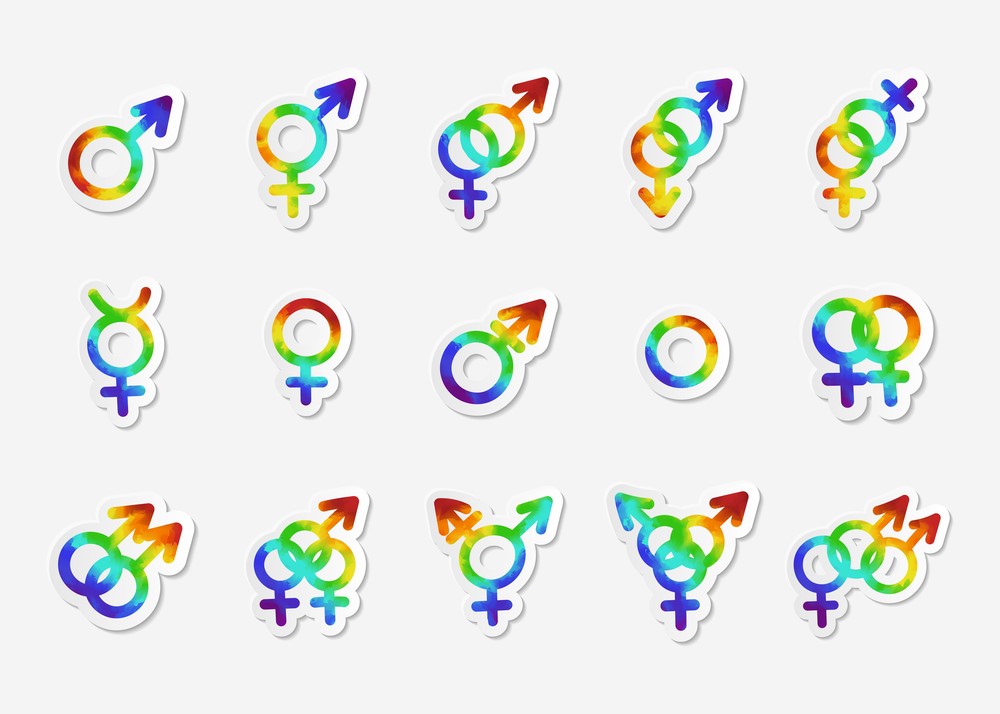
Generation Z is the first generation where people who identify as only heterosexual are not the majority. Only 48 percent of Generation Z identifies as straight, down significantly from the 65 percent of Millennials who identify as straight. Generation Z tends to view sexuality as a spectrum similarly to how they view gender. As with gender and pronouns, one of the easiest ways to see this trend is in the language people use to self-identify.
In addition to straight, gay, and bisexual, members of Generation Z identify as pansexual, asexual, or simply queer. Pansexual people are fluid in their sexual orientation and reject the term bisexual because it relies on the gender binary. Someone who is asexual is not sexually attracted to any gender. The term queer has been used pejoratively in the past, which may cause older generations to balk at the use of it to self-identify. But for Generation Z, and some Millennials, it has been reclaimed as an inclusive term for all members of the LGBT community, especially those who are not represented by the letters L, G, B, or T.
What do all these terms have to do with Generation Z's views on relationships? First and foremost, we may see fewer heterosexual relationships among Generation Z. The relationships they do have may redefine the roles of partners within them. While this may be disconcerting for some, it could actually lead to something great – truly egalitarian romantic relationships. If all the old-gendered rules and expectations of dating and relationships dissipate, we are left with the opportunity to get to know one another not as men and women but as human beings.
In many ways, the Internet is already helping to facilitate this. People "meet" online and may spend hours chatting and getting to know one another before they ever see one another face to face. Of course, this comes with a host of concerns all its own. One thing is certain, however, the Internet has disrupted the status quo when it comes to dating and relationships. But since Generation Z has never known life without the Internet, the old ways of courtship may be as foreign to them as a rotary phone or an 8-track.
Interestingly, Generation Z is actually less likely to use online dating and social media to attempt to find a romantic partner than previous generations. Only eight percent of teens today report meeting a dating partner online. Part of this may be attributable to their age. The oldest members of Generation Z are in their early 20s and the youngest are still in high school. Potential dates can be found in the high school classes and on college campuses. There's really no need to search online. That may change in the future when they are actively looking to settle down, but if Generation Z follows the trend set by Millennials that won't be any time soon.
Restructuring Families
While the traditional nuclear family unit, a husband and wife with two kids, has not been the reality for many families for a long time, most previous generations still held on to it as an ideal. Millennials are delaying getting married and having children until their mid-thirties. Although what many do not see is that Millennials are not delaying marriage and starting a family because they do not believe in the institutions. Quite the opposite, in fact.
Millennials have grown up with a high divorce rate and faced an unstable economy as they began to arrive on the job market. These two traits combine to make Millennials cautious about getting married too soon. They want to be certain they have chosen the right partner. Additionally, they want to feel as though they are financially able to support a family before starting one.
Generation Z, on the other hand, has grown up in a wide array of family structures. They do not revere the nuclear family as the glue keeping society together. Around one-third of the members of Generation Z have grown up in single parent households. Many have been raised in multigenerational homes, living with parents and grandparents. They tend to be close to their parents, with nearly 90 percent referring to parents as their best friends.
Additionally, this generation's families are more diverse than their predecessors in nearly every way imaginable. Generation Z is coming of age in a world where same-sex marriage is legal. They have peers with two moms or two dads and accept it as normal. The religious, racial, and ethnic makeup of Generation Z's families are also far more diverse than the families of Millennials. For members of Generation Z, the only essential component for a family is love and love can look any number of ways.
Yet, despite their overall satisfaction with their families of origin, Generation Z does not rank getting married as important to them. Part of this could be a sign of their age. The generation before them is putting off marriage until after they feel established in their careers. If that is not until their mid-30s, many members of Generation Z are less than halfway there.
It is also possible that members of Generation Z are not invested in the institution of marriage. As mentioned earlier, Gen-Z has come of age in a time filled with the falling of monoliths, both figuratively and literally. From the World Trade Center Towers in New York to the real estate economy and large banks, Gen-Z has grown up with the knowledge that no institution is impenetrable or eternal. They are inherently skeptical of anything that claims to last forever. Members of Gen-Z may very well consider marriage to be one of many things that may have had value in the past, but it is of little use today. As they have embraced a spectrum of gender and sexuality, Gen-Z may also believe in a spectrum of family, including chosen family.
The concept of chosen family arose from within the LGBT community. Chosen family includes the people in your life who are most important to you. Two of the main reasons the LGBT community developed chosen family was due to the inability to get married and the loss of family of origin.
Until very recently, same-sex marriage was not legal in all states and coming out as LGBT often resulted in being rejected by your family of origin. But human beings are social creatures who thrive in communities and tend to wither in isolation. Chosen family fills this need but does not require outside recognition of its validity. Gen-Z may be drawn to the concept of chosen family for its flexibility. A generation that believes in the fluidity of gender and sexuality is likely to prefer commitments that allow for malleability as well.
Continued from page 4
What Do These Changes Mean for Marketing?
Millennials have been the focus of a lot of research and study, but companies really need to be thinking about and researching Generation Z, as I have been doing for a decade. A recent study by New York-based ad company, Sparks & Honey, revealed that more than 25 percent of the American population belongs to Generation Z and they have money to spend. The average member of Generation Z gets a weekly allowance of $16.90 each week. Collectively, that means Generation Z has $44 billion in allowance each year. As they come of age and join the workforce, their income and market share is going to start to increase pretty quickly. Marketers who are not already strategizing about how to appeal to Gen-Z, need to get started and fast.
Social Media Natives
Where Millennials are digital natives that grew up consuming large amounts of content, Gen-Z is a generation of social media natives. They have grown up creating content. Gen-Z may be on Facebook, but that's not where they spend the majority of their time. Sponsored Facebook ads, no matter how effectively Facebook's algorithms may target users, are not going to attract the attention of Gen-Z.
Recently Facebook started allowing advertisements to play in the middle of certain types of shared content, which reflects the age of the average Facebook user. Where older users will sit through the ad to see the rest of the video, Gen-Z does not have the patience for that. According to research, they have an 8-second attention span and if your ad interrupts their video, they will simply close the video. They will either move onto the next thing or find the video on another platform.
If Gen-Z is not on Facebook, where are they? They use social media in two distinctly different ways from previous generations: to be anonymous or to create content. Gen-Z interacts with their peers largely on social media platforms, such as Whisper and Snapchat. They can be found creating content on Instagram, Vimeo, and YouTube. To appeal to Gen-Z, on social media as well as on other platforms, marketing companies need to create ads that have value for Gen-Z and communicate their message in an environment that reflects their ideals.
Sex Sells, But Generation Z Isn't Buying
Gen-Z is a generation of diversity. In addition to the gender and sexuality diversity mentioned above, there has been a 50 percent increase in young people who identify as multicultural since the year 2000. Marketing campaigns that do not reflect the diversity of Gen-Z will be seen as outdated. Inclusivity is the name of the game with Gen-Z because they believe that representation matters. They want to see people, relationships, and families similar to their own on screen and they will not tolerate anything that resembles sexism, racism, homophobia, or transphobia.
There is nothing that reveals the difference in marketing to Millennials versus Gen-Z quite so clearly as the recent Carl's Jr. advertising campaign. Launched at the end of March 2017, the story of this ad campaign is that Carl Hardee, Jr. was entrusted with the family company a few years back. During his reign, Carl's Jr advertisements were filled with scantily clad women and double entendrés. But now, the storyline goes, Carl Hardee, Sr. is back. He became fed up with the immature, objectifying advertisements and has come to restore dignity and respectability to the fast food restaurant.
The message here is clear: gone are the days where objectifying women was met with a wink and nudge. Millennials may have been willing to embrace it as "all in good fun," but Gen-Z is simply not having it.
Be Inclusive or You'll Be Irrelevant
Additionally, Gen-Z will reward advertising campaigns that reflect family and individual diversity. They understand social media influence and will gladly share content that promotes inclusivity. Dove experienced great success with their Real Women campaign, where they began including more size and racial diversity into their marketing and explicitly stated that it was time to portray "Real Women" in advertising.
In April 2017, Dove launched their Real Moms campaign to introduce their baby product line. Designed to bust stereotypes of what a typical mother looks like, the series of commercials will feature cattle ranchers and break-dancers. With their first advertisement in the campaign, they broke entirely new ground in marketing by featuring a transgender mom. The commercial brilliantly shows this mom performing the mundane tasks of motherhood, such as changing diapers, as she discusses the difficult and insensitive comments she gets as a transgender mom. It's very clear in the ad that she is, within her home and family, just another real mom who deserves to be seen as such. This is exactly the type of advertisement that will resonate with Gen-Z.
Continued from page 5
Conclusion
If you want to market to Generation Z, and you should, you need to embrace their ideals. Both Dove and Carl's Jr. understand that Gen-Z is not going to accept anything less than full inclusivity. Companies that worry about losing the market of older generations are ignoring the size and potential power of Gen-Z. The future of successful marketing is a lot like Gen-Z and their views on gender and relationships: diverse, inclusive, and groundbreaking.