Monday, February 23, 2026

Late Night Improv Entertainment: More Politicians, Please

 Not getting enough political chat? Here's the latest commentary on what the experts say: Philip Jay LeNoble, Ph.D.

Commentary

Late Night Improv Entertainment: More Politicians, Please

Why do we watch politicians on late-night TV? Not always to get their positions on major policy topics.

Viewers want to have some unexpected talk. Or entertainment. Perhaps politicians do as well.

Sometimes we want to see them make fools of themselves. They may stay stupid or outrageous things -- in between more serious discussion topics.

Best of all, we are uncertain what might happen. And that’s the whole point.

This is why many Republican-minded voters like President Trump. Because his remarks can be crazy, impromptu, entertaining, or totally off the cuff -- filled with lots of wild insinuations and of course, mistruths and outright lies.

All this reflects on where the Federal Communications Commission is going with its hard-edged “equal time” rules over the air daytime or late-night talk shows, which has had a pseudo-exemption when it comes to politicians as guests sitting alongside celebrity and Hollywood talent.


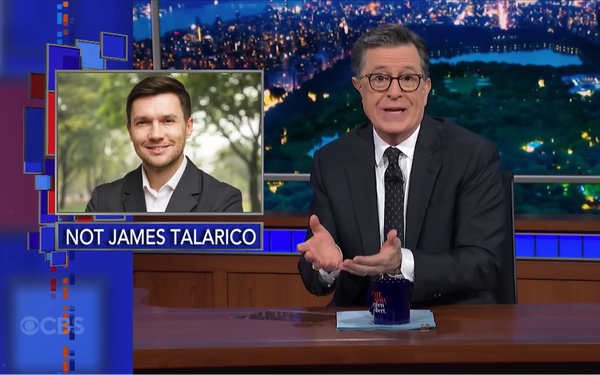
This comes in the midst of much scrutiny over ABC’s “The View” and more recently CBS’ “The Late Show with Stephen Colbert," which intended to have James Talarico, a Texas Democratic candidate for Congress, on its show.

But corporate executives at Paramount Skydance put the kibosh on it. In turn, “Late Show" producers decided to air a 15-minute segment on YouTube that pulled in some 8.2 million views.

TV Watch took a spin on what fellow MediaPost columnist Adam Buckman referenced when he said watching politicians can be a waste of time when they make “fools of themselves” on TV shows.

Sure, and perhaps that is the point. Viewers will want to watch that.

Running for Congress can be about presenting a profile that largely offers politicians a pristine, honest image. But they are human. In the hands of a quality late-night comedian-interviewer, this can also mean good “entertainment.”

With a politician on late-night shows, we don’t know what we are going to get. However, if we see Brad Pitt, Scarlett Johansson, Margot Robbie, or George Clooney on a late-night show, we know pretty much why they are there -- to promote their latest TV show, movie, cause or specific product/service -- and that is very predictable.

In the current political environment, not only do we need more politicians, but we should find better ways of talking with them.

The best TV is the unexpected -- and hopefully entertaining.

Paramount Reportedly Ups WBD Bid To $32 A Share

 Seems like Paramount is an important factor to own these days, and the bidders are quite determined to own this legacy brand: Philip Jay LeNoble, Ph.D.


Paramount Reportedly Ups WBD Bid To $32 A Share


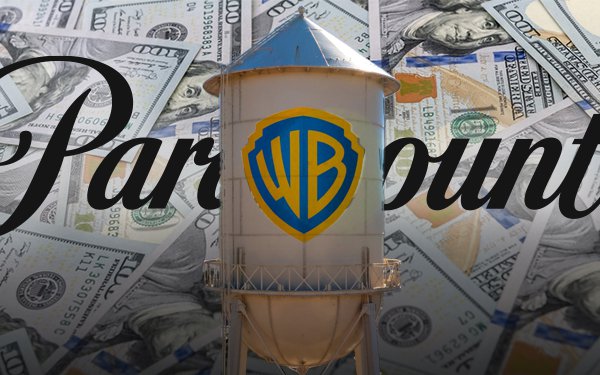
Paramount Skydance is pushing ahead in its attempt to buy Warner Bros. Discovery, intending to increase its bid to $32 per share to purchase the entire company, according to reports.

Paramount's current formal offer for the company is $30 a share. Earlier reports noted that the company was willing to raise this offer to $31 a share.

This comes as WBD will conclude its seven-day extension of deal-making talks on February 23 at 11:59 p.m.

As a competing bidder for WBD, Netflix gave the company its approval to go ahead with that extension on possible merger talks.

Netflix's deal is valued at $27.75 a share to buy a major piece of the company -- its streaming and studios business.

WBD has set a shareholder vote on the Netflix transaction for March 20 -- a deal the WBD board of directors continues to recommend.


BISRetail-sp26-InsiderCircle-640x480dbl.gif


If WBD dramatically moves to shift to the Paramount deal, it would need to pay Netflix a $2.8 billion termination fee, which Paramount has agreed to pay for.

Paramount executives had no comment by press time in response to inquiries from Television News Daily.

On Friday, Paramount said it cleared U.S. antitrust concerns by federal agencies.

Over the weekend, President Trump in a social media post said that Netflix must fire its board member Susan Rice or the company would “pay the consequences.” Rice has made critical remarks about recent business interactions with Trump.

Mid-Monday trading shows WBD's stock up flat at $28.76; Paramount, 3% lower to $10.43; and Netflix's stock down 4% to $75.30.

Friday, February 20, 2026

Tariff Reversal Could Trigger More Ad Dollars


Tariff Reversal Could Trigger More Ad Dollars

Consumer technology and automotive sectors have been cited as having "pulled back" the most on digital ads, but today's U.S. Supreme Court ruling could remove the immediate cost pressures that prompted companies to make those cuts.

The ruling found some of President Donald Trump’s tariffs illegal, but stopped short of saying whether or how the federal government must refund businesses for duties they have paid. The law is intended for use in national emergencies. The shift could have major implications for the global economy. 

The justices ruled 6-3, and conservative Chief Justice John Roberts wrote the majority opinion for the ruling.

The ruling upheld a lower court's decision that Trump's use of this 1977 law exceeded his authority. The law, the International Emergency Economic Powers Act (IEEPA), did not grant Trump the power he claimed to impose tariffs.


Roberts cited a prior Supreme Court ruling, writing that "the president must 'point to clear congressional authorization' to justify his extraordinary assertion of the power to impose tariffs," according to Reuters. 

The ruling removes one primary roadblock to infuse investments in digital advertising.

Time reports that companies that had to pay tariffs might have an opportunity to seek a refund from the Treasury Department, but Justice Brett Kavanaugh, writing in dissent, noted that “refunds of billions of dollars would have significant consequences” for the U.S. economy, and warned that the “process is likely to be a ‘mess.'"

The Court also said nothing about whether -- and if so, how -- the government would return the billions of dollars that it collected from importers, he told Time.

U.S. tariffs implemented in 2025 by the Trump administration have disrupted every industry, but none as much as retail and automotive.

"While the decision provides some near-term relief, it does not eliminate the broader trade policy uncertainty facing retailers and brands," said Emarketer Analyst Zak Stambor. "We expect the ruling to create a modest tailwind for retail sales beginning this year, though that benefit will gradually fade by 2028."

Emarketer revised its forecast on Friday for retail, estimating sales will grow 3.5% to $7.78 trillion this year, roughly $13 billion higher than its previous outlook.

A report published in September 2025 from Emarketer expected retail and automotive to take the biggest hit and cut the most ad spending.

Emarketer across all sectors expected U.S. digital ad spend to reach $338.27 billion this year, representing a 9.5% year-over-year growth. An earlier forecast predicted 11.5% growth in 2025.

The Interactive Advertising Bureau had already forecast that U.S. marketers overall would spend 9.5% more in 2026 compared with 2025 on digital advertising.

The growth, forecast through polling domestic buy-side ad buyers at agencies and brands, is partly due to “major cyclical events” including the midterm elections, Winter Olympics, and the FIFA World Cup. Excluding those events, the IAB said, growth still wavers between 7.1% and 7.8%.

The News/Media Alliance, applauding Friday’s U.S. Supreme Court Ruling, shared its views on how tariffs hurt publishing.

“We support strong trade enforcement to protect U.S. industries and U.S. jobs," Danielle Coffey, president and CEO of the News/Media Alliance, wrote in prepared remarks. She called tariffs "counterproductive and unnecessary."

Further implementation of tariffs would result in the loss of thousands of jobs in the already-stressed U.S. publishing, printing, and paper industries, leading to less quality journalism available to the American people, Coffey wrote.

The U.S. Constitution grants Congress -- not the president -- the authority to issue taxes and tariffs, although Trump turned to a statutory authority by invoking IEEPA to impose the tariffs on nearly every U.S. trading partner without the approval of Congress, according to Reuters.

Trump did impose additional tariffs under other laws that are not at issue in this case, Reuters explained. Based on government data from October to mid-December, those represent about one-third of the revenue from tariffs.

Are You an Advertiser -- Or Just Your Agency's Favorite Customer?

 Just to best understand a rather new term, "proprietary  media"....Proprietary media (or inventory media) is ad space a media agency buys upfront with its own funds, acting as a principal rather than an agent. The agency owns this inventory, often reselling it to clients at a markup without disclosing the original price or allowing audits. Key synonyms include inventory mediaprincipal-based buying, or principal media. Another reason, why I always have liked calling on local-direct clients and saving them lots of unnecessary revenue losses: Philip Jay LeNoble, Ph.D.

Commentary

Are You an Advertiser -- Or Just Your Agency's Favorite Customer?

If there’s one thing that never changes, it’s the industry's ability to dress up a potential conflict of interest as a "strategic solution” or a “competitive advantage.”  Proprietary or principal media is the current poster child for this.

Lately, many agency media pitches include these "exclusive" bundles. The story is compelling: better pricing and increased agility. And: “It’s the media you would buy anyway, but now we have bought it for our clients and you can get it at our exclusive price.”  But let’s be honest: When your advisor is also the seller, the line between "best for the client" and "best for the agency’s margin" becomes a mess.

The U.S. market is leaning into principal media hard. Recent forecasts for 2026 suggest proprietary media will continue to be a massive revenue engine for agencies as they look to offset declining traditional margins. We’re seeing a "K-shaped" media economy where the top holding companies are leveraging their massive scale (like the recently merged Omnicom and IPG) to obtain and market proprietary bundles in fragmented spaces like Retail Media and CTV.


The ANA has been sounding the alarm on transparency for years, and while we’ve seen some wins like advertisers significantly tightening the transparency and media audit language in their contracts, there is still a massive $26.8 billion lost annually to inefficiencies.

That’s because many advertisers have not addressed the various elephants in the room. Proprietary media, mixed in with standard media buys and shielded by limited audit rights, makes it nearly impossible to tell if what you pay is what you should be paying -- or even should be buying in the first place.

ISBA in the UK is what the ANA is in the U.S. It has just released a major governance paper on the topic of proprietary media, because U.K. advertisers are seeking ways to push back.

Don’t get me wrong, and I’ve said this before: Proprietary media isn’t inherently "evil." It can offer genuine value, especially in accessing premium inventory that’s hard to get. But it’s a tool that requires a very sharp set of guardrails. Without them, you’re not an advertiser; you’re just a customer of your agency’s inventory business.

So if you’re going to play in this sandbox, don’t do it on the agency's terms, but create your own set of rules, enforced by third-party audit rights. For instance, create an internal strategy that defines exactly when proprietary media is allowed, and what kind of approvals are needed to include them in the mix.

Demand campaign-level transparency. If it’s proprietary, it needs to be its own line item, have its own reporting, and its own performance metrics. Do not accept "bundled" reporting that hides the markup. Put a hard cap on what percentage of your total budget can go into proprietary solutions and only deviate from that cap with approval in advance.

And most importantly: Update your contracts to ensure you have the right to see the data. If the agency says, "you can't audit this because it's proprietary," that’s a red flag you need to discuss.

Proprietary media is a reality in 2026. You can use it to find value, or it can be used to extract value from you. The difference is entirely in your governance.

The Hidden Risk In AI-Driven Marketing: Not Knowing the Data Behind the Model

 A little education re: AI...learning what to believe and what may be less believable!  Philip Jay LeNoble, Ph.D.

Commentary

The Hidden Risk In AI-Driven Marketing: Not Knowing the Data Behind the Model

AI is involved in every step of the media process, generating output faster than a human ever could. The risk isn’t AI itself; it’s how much we rely on it without understanding the data behind the models shaping decisions.

What “AI Data” Actually Means

When marketers hear “AI uses data,” it’s easy to assume it means campaign results alone. It’s far more layered than that.

Most AI-driven tools rely on some combination of:

  • Training data: Historical datasets used to teach the model, often a mix of public, platform-level, or proprietary datasets.
  • Input data: Briefs, targeting parameters, budgets, performance metrics, and prompts.
  • Reference or enrichment data: Benchmarks, modeled audiences, third-party datasets, or performance trends.
  • Feedback loops: Past results that influence future recommendations, sometimes reinforcing old patterns.


Every tool has its own nuances, and vendors vary in transparency levels.

Why This Matters

Knowing AI data sources isn’t a technical exercise for the ops team; it has implications for how media strategies are built and optimized. AI models learn from patterns, and those patterns shape strategy. If the underlying data over-represents certain platforms, formats, or attribution models, recommendations will naturally skew in that direction, even if it’s not the best strategic move. The output may look like “optimization,” even when it no longer aligns with business goals.

Optimization Without Context Is Still Optimization

AI is good at optimizing toward whatever it’s instructed to value. But KPIs are incomplete without human interception:

  • CTR doesn’t equal brand impact.
  • Cheap conversions don’t equal quality.
  • Short-term efficiency doesn’t equal long-term growth.

Without context, incrementality, offline performance, seasonality, or real-world constraints, AI can confidently optimize in the wrong direction, without understanding why those decisions matter.

Bad Data Gets Scaled         

AI can scale bad data. Inconsistent naming conventions, incomplete UTMs, blended attribution models, and platform-analytics gaps will still produce an output: “garbage in, garbage out faster and at scale.”

The Transparency Gap with AI-Powered Tools

Many AI-powered tools operate as black boxes - recommendations without rationale, or insights without clarity into inputs. There isn’t always a clear breakdown of training data sources, data influencing results, or how frequently models are updated. Yet marketers are expected to act on and defend those outputs.

What We as Marketers Should Be Asking About AI

Knowing the data sources is part of the job. Ask vendors:

  • What data sources train this model?
  • How are attribution methodologies handled?
  • Can recommendations be audited?
  • How frequently is the model updated?
  • Is there any data intentionally excluded?
  • Can we customize this data used?

Vague answers are a red flag.

AI Is An Assistant, Not A Strategist

AI is a powerful tool, but it’s still a tool. AI processes data, marketers provide meaning. Human judgement sets the objectives, applies business context, and pressure tests recommendations.

Understanding where AI gets its data is a strategic responsibility. Marketers who get ahead won’t be the ones who use AI blindly. They’ll be the ones who question it, validate it, and use it intentionally, knowing the data behind the model.

Tuesday, February 17, 2026

Super Bowl Advertising in The Age of Fear, Nostalgia, And Very Expensive Feelings


Commentary

Super Bowl Advertising In the Age of Fear, Nostalgia, And Very Expensive Feelings

This year’s Super Bowl made one thing painfully clear. Advertising is having an identity crisis, and it is playing out in real time on the most expensive stage in the world.

On one end of the spectrum, brands are terrified. They are afraid of saying the wrong thing, offending the wrong group, or being dragged into a conversation they did not intend to have. On the other end, a few brave brands are remembering that advertising is supposed to mean something, not just avoid scrutiny.

Rocket’s decision to hire Lady Gaga to sing the "Mister Rogers" theme over a story about community and belonging felt almost radical. “Be a good neighbor” should not be a brave message. In 2026, it is. In a country that can barely agree on what those words mean anymore, Rocket chose to say them anyway. Brands that are not afraid to have a perspective will always gain more fans than they lose. Playing it safe is the fastest way to be forgotten.

At the same time, this Super Bowl was drenched in nostalgia. Millennials are officially running the world, and they are spending eight million dollars at a time to recreate their childhoods. Green Day. Backstreet Boys. Mister Rogers. Dunkin’ ads that feel like they wandered in from a ‘90s sitcom. Somewhere, a CMO is pitching Topanga with a Skip-It for next year.


Nostalgia works because it is comfortable. It reminds us of a time before everything felt so complicated. But when every brand is pulling from the same cultural scrapbook, the work starts to blur together. Familiarity alone is not a strategy. It is a shortcut, and shortcuts rarely lead to anything memorable.

Nowhere was this tension more obvious than in the AI category. Subscription-only platforms spent Super Bowl money to mock the idea of ads, even though most consumers still do not understand what separates one AI platform from another. Perception mattered more than nuance. When OpenAI floated the possibility of ads, Anthropic seized the opportunity to position itself in contrast. Meta continues to run AI ads for its smart glasses. This is a land grab. While understanding is still low, these companies are racing to claim attention and trust before consumers fully know what they are choosing.

Then there were the brands that actually understood how culture moves now. Fanatics did not treat the Super Bowl as the moment. They treated it as the finale. Instead of another yelling ex-athlete shouting odds, they let Kendall Jenner roast her exes for 90 seconds. The spot was already driving massive app downloads before the game even aired because it launched on social first and went viral organically. The Super Bowl buy was the exclamation point, not the starting line.

That is the lesson most brands still refuse to learn: The Super Bowl is not a strategy, it is a stage.

In a country that feels like a dumpster fire most days, advertising still has the power to make people feel something. Sometimes that something is laughter, like Ben Stiller crashing through a drum set. Sometimes it is something stranger and deeper, like a horse, an eagle, and "Free Bird" reminding us we are still in here somewhere, or a collection of backsides in Levi's doing effortlessly cool in a way only they can do it. That is not escapism. That is connection.

And connection, when done honestly, is still undefeated.

Are We Done with Generational Marketing Yet?


Are We Done with Generational Marketing Yet?

I’ll admit it: I used to love personas. I’d spend hours crafting profiles like “Lauren, the 39-year-old suburban mom who buys oat milk on Tuesdays” and feel like I’d cracked the code of human behavior. It felt smart, surgical, genius even. But now I’m cringing thinking about it.

In hindsight, we were kidding ourselves. Those personas were rarely as useful in the wild as they were in the pitch deck. And when the industry got tired of micro-targeting fatigue, we swung hard in the opposite direction: lumping millions of people into generational buckets.

Suddenly, whole campaigns were built on clichés like “Gen Z loves authenticity” or “Boomers don’t get tech.” It’s a clean shortcut, sure—but at best it creates watered-down work, and at worst it alienates the very people we’re trying to reach.

The Myth of Generational Homogeneity

Take millennials. At age 38, I’m one. But I’m a remarried city-dweller with no kids on the horizon, while most of my closest millennial contemporaries live in the suburbs, juggle kids’ schedules, and spend their weekends on baseball diamonds and trampoline parks. Same “generation.” Diverging priorities and buying behaviors.


That’s the problem. When we treat a generation as a monolith, we erase the nuances that actually matter. We end up with one-size-fits-none marketing -- and waste money chasing a phantom audience that doesn’t exist.

Culture already proves this. Gaming is a $200-billion industry spanning teenagers to retirees, with the average gamer now 34. Pickleball went from a retiree stereotype to the fastest-growing sport in America, played by college kids, mid-career professionals, and retirees alike. Passions don’t stay locked in one generation.

If marketers ignore that, we’re not just missing the mark, we’re leaving money on the table.

Beyond Generations: What Really Connects People

The strongest connections today are happening across age lines. A 22-year-old and a 62-year-old can bond more over pickleball, side hustles, or the same Discord community than with anyone who just shares their birth year.

The communities driving culture right now are age-agnostic: BookTok, fantasy football leagues, craft mocktail clubs. They’re defined by what people care about and how they show up.

And when brands show they “get it,” they don’t just gain relevance. They create belonging. That’s a stronger currency than generational cool points.

A New Playbook: Beyond Birth Year Buckets

Before your next brief, strike “Gen Z” from the target audience slide. Replace it with a passion, mindset, or habit.

This post was previously published in an earlier edition of Marketing Insider.