Wednesday, October 8, 2025

YouTube Launches Program to Connect Advertisers to Third-Party Experts

For local-direct advertisers in your DMA who are looking at additional new opportunities t reach their, client, customer, potential or current patient, YouTube will help local business marketers learn how to best use their site and maximize results: Philip Jay LeNoble, Ph.D.


YouTube Launches Program to Connect Advertisers to Third-Party Experts

To help brands and agencies improve their campaign efforts on YouTube, the video-sharing platform is launching a program designed to highlight third-party providers capable of assisting with YouTube ads.

Per YouTube’s recent blog post, its new “Activation Partners” program focuses on showing advertisers a collection of trusted third-party partners known for their “expertise in buying strategies and campaign management,” including platform-specific optimizing and targeting. 

Listed partners featured in the program currently include Channel Factory, MiQ Digital, Pixability, and Zefr. Each partner has a unique set of skills, whether its AI-powered targeting, contextual insights, ad buying, and more.

For example, MiQ processes trillions of signals to help advertisers understand what consumers are watching, browsing and buying. 


These providers have an “Activation Partners” badge attached to their YouTube account. However, new partner onboarding is on pause, with application for future membership open on a rolling basis.

As the number-one streaming platform in the U.S., Google-owned YouTube notes that its activation partners will focus primarily on connected TV (CTV) campaigns, in order to help brands and agencies better relate to consumers’ YouTube streaming habits.

Bari Weiss CBS News Story Produces the Usual Handwringing

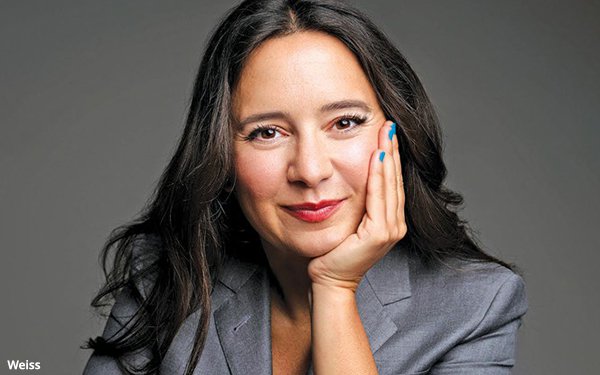
 CBS NEWs is getting a new news leader in Bari Weiss: Philip Jay LeNoble, Ph.D.

Commentary

Bari Weiss CBS News Story Produces the Usual Handwringing

The installation of Bari Weiss at the top of the pecking order at CBS News has elicited a predictable outcry.

Uh-oh, she’s conservative. Uh-oh, she’s an outsider. Uh-oh, uh-oh, uh-oh. Suddenly, everybody’s worried about CBS News.

The right has long complained that CBS News is too liberal. The left has long said CBS News is not really liberal, just correct in the way they frame the news and report it.

Not surprisingly, CBS News has traditionally defined itself as neither conservative or liberal. It sees itself as a news organization characterized by objectivity, integrity and old-fashioned news values.

But the head of the new company that owns CBS News, David Ellison, thinks stodgy CBS News needs a makeover.  


So, he is bringing in Weiss, 41, to remake it. At the same time, he bought her news website, The Free Press, for a reported $150 million.

So, now, not only is Weiss the new editor in chief of CBS News -- a job that once represented the pinnacle of journalistic achievement -- but she also gets to continue managing The Free Press.

And she is now incredibly wealthy, having sold her company for nine figures just four years after she launched it. Evidently, this is a woman of high achievement and a force to be reckoned with. 

“As editor in chief of CBS News, Weiss will shape editorial priorities, champion core values across platforms, and lead innovation in how the organization reports and delivers the news,” said a press release from Paramount Skydance.

After the news broke earlier this week, the chattering and the hand-wringing began. Much of the reaction had to do with the “conservative” label many have hung on her, which would put her at odds with CBS News, say the naysayers.

On the issue of that label, Weiss herself begs to differ. An online search reveals that she has referred to herself at different times as a “radical centrist,” a “left-leaning centrist” and “politically homeless.”

She has been a critic of cancel culture and whatever we choose to group under the classification of “woke orthodoxy.” 

She is also considered to be socially liberal. She is pro-choice and in a gay marriage, note some of the stories about her.

So, she holds various views and opinions that make her hard to peg, which presents a problem for a world that prizes categorization. In today’s world, you are either conservative or you are liberal. You cannot be both.

On Monday, The New Republic actually said that Weiss’s position at the top of CBS News will “help destroy America as we know it.”

The phrase was part of a headline and explanatory text at the top of an opinion piece. “MAGA Lite: What ‘Bari Weiss Conservatism’ Is, and Why It’s Dangerous,” said the headline.

“The new CBS executive isn’t exactly MAGA,” said the text beneath the headline. “But her polite Trumpism will still help destroy America as we know it.” Wow! Who knew CBS News had so much power?

MSNBC said Paramount’s purchase of The Free Press “plus the elevation of Weiss is a clear signal [Ellison] wants to steer one of American journalism’s oldest and most respected institutions in a distinctly right-leaning ideological direction.” This remains to be seen.

According to The New Yorker this week, there are those who “fear a Trumpified Weiss is storming the citadel of objective journalism.” 

CBS News a citadel of objective journalism? I have as much respect for CBS News as the next person, but not everybody feels that way.

When commentaries start using words and phrases like “storming the citadel” and “destroy America,” my eyes tend to glaze over. 

My own belief is that the existence of the United States is not threatened by “polite Trumpism.” In fact, anything that is labeled “polite” in this day and age strikes me as an improvement.

Midterm Political TV Ad Spend Up 22% To $10.8B

 Here's a bit of a preview of the upcoming Mid-Term elections media advertising potential not to miss: Philip Jay LeNoble: Ph.D......PS..pay no attention to what seems like text for another article...I don't know why it's there...so just read what can be viewed.

Commentary

Midterm Political TV Ad Spend Up 22% To $10.8B

Strong political TV/streaming advertising will continue next year for the 2026 mid-term elections, rising to a projected new record total of $10.8 billion, according to AdImpact.

This would be up 22% from the 2022 midterms ($8.9 billion) and a 4% decline from last year’s Presidential-focused political ad season estimated at $11.2 billion.

For next year, AdImpact sees broadcast TV still taking a dominant 49% share of political spend -- $5.28 billion (down slightly from $5.36 billion in the 2024 political year)

All media platforms are expected to be down versus 2024 -- except connected TV, which is projected to climb to $2.48 billion from $2.34 billion.

Digital media will slip to $1.43 billion (from $1.7 billion), with cable TV down to $1.29 billion (from $1.37 billion), radio dipping to $280 million (from $330 million) and satellite dropping to $80 million (from $90 million).


Spending on U.S. Senate campaigns in 2026 will rise slightly versus 2024 to $2.8 billion. The widely watched U.S. House of Representatives races will climb 27% to $2.2 billion -- the first time those races will top the $2 billion mark.

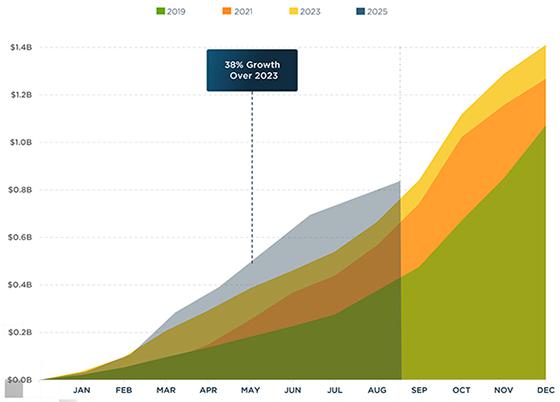
Even so-called "off-year" political spending is improving. Through August 26, 2025 -- season-to-date -- AdImpact tracking for political ads is now 38% higher ($900 million) versus $657 million in 2023. It is also 58% higher than 2021’s $572 million.


Research comes from AdImpact's monitoring of more than 24,000 elections, 33 million ad airings, and $41 billion in overall political ad spending. 

From Demographics to Depth: Why Audience Research Must Go Beyond Personas

 As we enter a new chapter in media marketing and new broadcasting platforms viz ATSC 3.0 NexGen TV, here's a bit of educational stuff media reps may need to teach their local-direct clients Philip Jay  LeNoble, Ph.D.

Commentary

From Demographics to Depth: Why Audience Research Must Go Beyond Personas

For decades, marketers have relied on tidy labels to define their audiences: “decision-makers in healthcare IT,” “millennial finance professionals,” or “C-suite leaders in cybersecurity,” for example. These descriptors may look neat on a persona slide, but they don’t reveal what matters most: how people think, what motivates them, what they aspire to, or what holds them back.

The risk of relying on demographics is clear. Campaigns are built on assumptions, and in today’s attention economy, assumptions don’t suffice. People don’t engage simply because a message matches their job title or age bracket. They engage when a message resonates; when it reflects their pressures, their ambitions, and their self-perception. That’s the difference between superficial engagement (even a negative comment counts as “engaged”) and true resonance that inspires action.

So how do marketers move beyond assumptions? Modern audience research offers a path. Today’s tools enable us to extract signals from across various digital ecosystems, including LinkedIn, Reddit and niche Slack groups, and translate them into insights that explain not only who an audience is, but also why they behave the way they do.

advertisement

advertisement

Artificial intelligence accelerates this process by scanning millions of data points to detect patterns no team could catch on its own. Frustrations that surface before they go mainstream, aspirations tucked into offhand comments, shifts in tone that signal evolving attitudes: all of these become visible when AI is applied at scale.

But data alone isn’t enough. Numbers need context. That’s where human interpretation takes over. Marketers should analyze patterns and translate them through a lens of psychology, values, and decision dynamics.

For example, understanding that a cybersecurity leader isn’t just thinking about stopping breaches, but is striving for recognition as a strategic partner to customers. A nonprofit leader isn’t only chasing donations, but wants to educate and become an authoritative innovator, making systemic change. Those nuances are what transform messaging from transactional to resonant.

This kind of research also uncovers how people think, not just what they say. Do they respond best to rational proof points or to emotional storytelling? Do they lean toward risk-taking or caution? Which archetypes —challenger, guide, protector — surface most often in their conversations? The answers to these questions reshape how marketers frame value, credibility, and trust.

Practical tools can make this work more accessible. Social listening platforms can uncover shifts in sentiment; AI-powered audience insight platforms highlight affinities and overlaps; community analytics tools track what’s happening in niche forums and Slack groups; and conversational intelligence platforms help surface insights from sales calls or support transcripts. Each has a role to play, but none should replace human judgment. Technology can uncover signals, but marketers must interpret them with empathy and context.

The outcome is simple but powerful: resonance. When narratives reflect truths that audiences already recognize in themselves, they cut through the noise more quickly and with greater clarity. Brands stop talking at people and start speaking with them. And when marketers take the time to listen, adapt, and reflect those truths, they don’t just earn engagement; they influence decisions.

Marketers Should Capitalize on Hispanics' Love of Streaming

 Local businesses in your DMA may benefit from connecting to their Latino community as we enter 2026; Philip Jay LeNoble, Ph.D.

Commentary

Marketers Should Capitalize on Hispanics' Love of Streaming

Marketers who want a share of the Hispanic market, which is one-fifth of the U.S. population with about $4 trillion in buying power, take notice of the latest Nielsen Report.  New data from the report show that streaming represents 55.8% of total TV time for Hispanic viewers, versus 46% for the general U.S. Other key findings show that Hispanics overindex on viewership of YouTube, Netflix and Disney.

Hispanics are still drawn to broadcast programming, along with cable shows focused on experiences and variety entertainment, which are mainstays of Spanish and general broadcasters. There is also a telling datapoint that Hispanics in general want to be represented in what they’re watching -- 56% agreed with this, a stat that’s even higher for Spanish speakers at 63%.

According to the report, YouTube is getting the lion’s share of marketers’ spend, with 96% of Spanish-language online spend going to that platform -- despite the fact it only captures around 21% of the overall TV time of Spanish-speaking audiences.

advertisement

advertisement

This is a huge opportunity gap for other worthy platforms that are getting Hispanic viewership.

“Brands that want to succeed in this environment must understand that Hispanic audiences are not waiting to be represented,” Nielsen senior vice president of inclusive insights, Stacie de Armas, said. “They are building their own platforms, amplifying their culture and demanding authenticity.”

Are marketers just checking the Hispanic box and defaulting to YouTube? What a miss that other streaming platforms offering strong Hispanic viewership are left out! 

We know that the Hispanic market is very diverse, not just by language but by country of origin, geography, income, lifestyle, and household composition. Time and time again we see this lack of advertising spending, when this is clearly the growth segment of NOW and not just the growth segment of tomorrow. In the age of analytics and ease of digital targeting, this truly makes no sense.

YouTube TV: Going Beyond Just Price Hikes


Commentary

YouTube TV: Going Beyond Just Price Hikes

YouTube TV and NBCUniversal’s tussle over what seems like regular carriage issues did not take the sharp turn pushed by big internet-based bundles of live, linear TV networks.

YouTube TV wanted not only a big piece of financial streaming from that pie -- a piece of subscriber fees from NBCU --  but access to some highly viewed streaming content on Peacock, according to reports.

YouTube was angling to secure high-profile content such as soccer/European football, Premier League and the highly viewed Peacock “Love Island” franchise series programming -- and possibly ad inventory from NBCU's highest-value TV individual TV series, “Sunday Night Football.”

Ease of access is the reason. Viewers would not need to punch up the Peacock app on the YouTube program navigation system, but could more easily view that content directly via YouTube TV app.


In turn, YouTube could command higher ad pricing -- and so could NBC, in theory. Analysts would say that valuable inventory could be bundled into the bigger Google advertising ecosystem.

But instead, YouTube TV landed a future new cable TV network: NBC Sports Network.

Peacock will also become available on YouTube Primetime Channels and through Google TV devices.

The deal will also include carriage of NBC owned stations, streamer Peacock, and cable entertainment network Bravo, as well as yet-to-be-spun off channels to Versant Media. Financial terms of the deals were not disclosed.

To refresh the bigger picture, YouTube TV is no longer a niche, internet-based pay TV bundler/seller of live, linear TV networks. It is now 10 million subscribers strong -- the fourth-largest pay TV distributor of any type.

Only Charter Communications (Spectrum), with 12.6 million subscribers), Comcast Corp (Xfinity), with 11.8 million; and Direct TV -- industry estimated at 11 million -- have more.

And YouTube TV continues to trend higher, according to analysts.

Now think about this: As a Google-owned company it joins up with its sister platform YouTube, the streaming service giant, which has the largest share of total day streaming viewing of any platform -- a 13.1% share, according to Nielsen’s August reading.

On another front -- and unrelated to issues with NBCU -- YouTube is flexing its muscles with another major TV network group owner. It dropped TelevisaUnivision -- which, like NBCU, witnessed its carriage contract expiring on September 30.

The issue, according to reports, stems from YouTube's plan, to shift Univision to a more expensive add-on-tier.

Media power? Monitoring the major TV media companies keeps shifting -- while the marketplace keeps maturing or evolving.

Play Commercials Softly but Carry a Big Streaming Ad Shtick


Commentary

Play Commercials Softly but Carry a Big Streaming Ad Shtick - Somewhere

If like me, you have a long-time habit of muting TV commercials, this might come as good news -- starting next year, there will be a ban on loud advertising on streaming platforms -- in California.

But beware that brands still need your engagement.

Major streaming services won’t be able to “transmit the audio of commercial advertisements louder than the video content the advertisements accompany,” according to the bill's text.

Netflix and Disney+ are among others that have been cited in the new legislation.

The Federal Communications Commission’s Commercial Advertisement Loudness Mitigation already exists for linear TV and radio but does not currently apply to streamers.

The FCC does not have regulation over streamers (but it does have regulation over internet providers that distribute streaming content).


Streamers are already held back -- informally when it comes to the broader commercial scene.

Consumers' expectations are already conditioned to buying into companies’ “limited advertising” on platforms -- around 4-6 minutes by hour -- which is not regulated.

The Motion Picture Association of America -- which represents the likes of Netflix, Walt Disney, Paramount Skydance, and Warner Bros. Discovery -- believes this bill is unnecessary. It says streamers have already “undertaken reasonable efforts to adjust the loudness of advertisements.”

Overall, premium streaming platforms still have lots of freedom to do what they please -- in terms of racy content, promotional content, program discovery and other areas.

Not so for live, linear TV stations/networks, which are heavily regulated by the FCC.

But now the FCC has been seriously considering a major rule in dropping the limits for TV station ownership -- which are capped to no more than 39% of U.S. TV households, especially in a rising competitive streaming video marketplace.

Why the loud ad messaging? There is rising disruptive ad-supported media everywhere.

Specifically there is also a glut of streaming inventory overall. And then we can factor in those more heavily FAST (free advertising-supported streaming TV) networks Tubi, Pluto and Roku Channel. Brands are still looking for better breakthrough engagement with their messaging.

Loud volume surely gets some of that -- as well as annoyance. If that goes away, what’s left? Maybe some visually shocking screen content with wild colors or imagery.

Eyes on the screen issues aside, my mute remote key doesn’t work so well on that.