Wednesday, February 26, 2025

Consumers Are Logging Off: Where to Shift Your TOFU Efforts Now


Another educational article for your direct clients. Philip Jay LeNoble, Ph.D.

Consumers Are Logging Off: Where to Shift Your TOFU Efforts Now

After 17 years, I finally deleted Facebook and Instagram. Being constantly bombarded with news, ads, and content that is at best, a waste of time and at worst, harmful misinformation, is overwhelming. The shift from seeing posts from friends and family to algorithm-driven content from strangers, combined with privacy concerns, made it an easy decision to step away.

And I’m not alone in my social media fatigue. A Gartner survey found that 53% of consumers believe social media has deteriorated due to misinformation, toxic communities, and bots. Gartner predicts 50% will significantly reduce or abandon social media this year.

Rather than relying on social media for awareness and relationship-building, brands must diversify their top-of-funnel (TOFU) efforts to meet consumers where they’re shifting their attention. Here’s where to invest next:

Owned content. Traditional social media may be fading, but content remains king. Investing in a well-optimized website, engaging email newsletters, and timely blogs creates a sustainable, long-term marketing foundation that isn’t subject to shifting algorithms or rising ad costs.

If social media reach declines, PPC costs skyrocket, or influencers lose their following, owned content ensures your brand’s visibility and credibility remain intact. By prioritizing content that you control, you build an audience that can keep coming back—regardless of external platform changes.

Even as AI reshapes search, engines will still prioritize trusted, in-depth content. Especially for B2B brands with long sales cycles, expert-driven content and branded search remain key for visibility and conversions.

Trade media. A Broadsheet survey reported that 82% of respondents found trade media coverage has a material impact on sales. Earned media coverage, or bylines in trade publications, allows you to reach a highly engaged, niche audience without competing with the 24/7 news cycle of mainstream media.

With trust in social media declining, third-party validation is more powerful than ever. Plus, with many consumers shifting their attention away from social media, some may turn to the trade publications they’ve relied on for decades to fill the information gap. Trade media coverage can be repurposed across marketing channels, extending its impact far beyond the initial publication.

Advertising on podcasts, TV, and traditional media. Podcast advertising is booming, with 500-plus million listeners worldwide, set to reach 650 million by 2027. Host-read ads feel like trusted recommendations, driving 60% of listeners to consider purchases. Similarly, use of CTV and streaming ads is rising as cable declines.

While digital marketing took center stage in recent years, many marketers are seeing success in bringing traditional tactics back into the fold. As consumers grow numb to digital ads in an always online world, strategic traditional media campaigns -- including billboards, print, and direct mail -- leave a lasting impression on potential customers.

Diversifying your TOFU marketing tactics beyond social platforms gives your brand more opportunity to reach consumers in moments of real engagement rather than mid-doomscroll. As always, don’t put all your eggs in one basket, and be ready to pivot your marketing efforts to other channels as they gain popularity.

5 Marketing-To-Moms Trends For 2025

 Here's something for your direct clients whose merchandise or services are best to reach the mom of the household. Hope you find it useful: Philip Jay LeNoble, Ph.D.


Commentary

5 Marketing-To-Moms Trends For 2025

It is estimated that U.S. moms spend approximately $3.1 trillion in the economy each year, and 2025 will be no different. With the emergence of Gen Z moms, who are more digitally astute than any prior cohorts of mothers, retailers can expect to see online sales increase and a much more educated shopper evaluating product options. Gen Z moms are not carbon copies of millennial moms, so consider these trends in marketing tactics to help you hit your mom marketing goals this year.

Affiliate integration: More and more influencers are discovering the fact they can make money linking their content to affiliate programs. Marketers can expect to see more social media campaigns with affiliate links integrated into mom influencer content. 

Tik Tok shop: Big brands will discover what smaller companies already know: Moms buy from Tik Tok Shop. Even better, they buy from Tik Tok Lives. Start-up brands like OPU Probiotics and Pop Daddy are seeing substantial growth from live selling events on Tik Tok.  This could possibly be the next direct-to-consumer move for big brands in 2025.

Ambassadors: One-off mom influencer campaigns are so 2024. Moms want a relationship with their favorite brands, and that goes for mom influencers as well. Ambassador programs allow brands to develop a relationship with moms that extends into insights, 24/7 feedback, organic social support, and authentic social posts.

Mom hacks: With the birth of a remote workforce, brands have forgotten that moms are still busy people even if they are working in the home. Moms -- no matter what stage of motherhood -- want solutions. Content that showcases hacks, time-saving solutions, and repurposing of old products gets shared most often with other moms.

Focus your digital content on how moms can use your product for more than its intended purpose, even if it causes your product team to snarl at you when you walk past their desk. Moms appreciate when your content recognizes her struggles.

Retail-specific campaigns: Part of being busy is that mom doesn’t want to have to search for products she sees on social media. In 2025, brands should work on creating retail-specific campaigns that showcase end cap displays, pallet placements, and social posts from the aisle of retailers so moms can easily find the product as they dash through the doors of a store

Moms buy products from companies who “get” her, so adapting your marketing tactics to their behaviors, values and motivations will go a long way in 2025 toward winning their business.

Friday, February 21, 2025

Stop Settling for Lazy Positioning: It's Hurting Your Business


Here's a solid marketing tip to share with your local-direct client whose efforts may be waning online! 

Stop Settling for Lazy Positioning: It's Hurting Your Business

“It’s simple: We’re the best."
“We care more than the competition."
Our product is an innovative AI solution.”

These are the kind of placeholder statements masquerading as positioning that I see far too often. They’re vague, generic, and devoid of insight. Worse, they fail the most critical test of all: giving your customers a compelling reason to choose you.

So why do so many companies settle for this lazy approach to positioning -- or skip it entirely? Weak positioning generally isn’t a conscious choice, but the byproduct of several inaccurate perceptions.

They Think Positioning Isn’t a Priority

In the rush for growth, companies often prioritize tactics over strategy. “We need leads!” takes precedence over “We need clarity about who we’re for and why they should care.” Without a clear positioning strategy, marketing and sales efforts are scattered, unclear, and underproductive.

They Fear Narrowing Their Audience

Many companies fear being too specific, so they craft broad, one-size-fits-all messages. As I’ve written here before, when you try to speak to everyone, you resonate with no one.

They Confuse Product with Positioning

I often see companies touting product features as if they are strategy. But listing what your product does isn’t positioning. Positioning answers why you do it.

They Underestimate Its Value

Working on positioning may feel like wasted effort, especially compared to the action of launching a marketing campaign or new product. But positioning provides the underpinning for every marketing and sales (and beyond) activity, and having a strong one makes all activation more efficient and effective.

But generic -- or worse, absent -- positioning isn’t just ineffective, it’s bad for business. It leads to wasted marketing dollars, apathetic customers, and frustrated teams.

On the other hand, clear, strong positioning is the foundation for building a brand that grows and lasts.  Consider:

-- Bain studies show companies with strong brand positioning grow 30% faster than their competitors.

-- Forbes research demonstrated consistent brand positioning can increase revenue by up to 23%.

-- HBR reported brands with clear differentiation see higher customer loyalty and retention rates.

Here’s how to build positioning that truly resonates:

Understand your customers deeply. There is no substitute for developing -- and documenting -- a deep understanding of your audience. Who are they? What goals are they trying to achieve? Your messaging should address their needs, not those of your CEO or product team.

Define customers’ pain points clearly. Strong positioning revolves around the challenges your offering solves. The more clearly you can articulate your customer’s needs, the more credible and relevant you become.

Frame the value of your solution through their eyes. Instead of talking about your product’s features and benefits, communicate them in the context of customer outcomes. How does your solution make their or their end-user’s life easier, their job more successful, or their business more competitive? Customers don’t care about what you do; they care about what you can do for them.

Articulate your purpose.  Define the deep-seated reason behind your offering and its benefits.  Why did you create it?  What beliefs led to your brand’s focus on addressing this challenge for these consumers? 

Stop settling for vague promises and product descriptions. Take the time to define who you are, who you’re for, and why you matter. Because if you don’t, your competition will --and they’ll take your customers with them.

Air Ball: NBA All Star Game Misses Nielsen Net


Commentary

Air Ball: NBA All Star Game Misses Nielsen Net

The second-biggest U.S. TV sports franchise -- the NBA -- just recorded its second-worst performance of the NBA All-Star Game ever -- with just 4.7 million viewers on TNT, down 13% from a year ago.

The least-watched All-Star Game was two years ago, with 4.6 million viewers.

Give the NBA some credit -- this year, anyway. It looked to boost interest in the game, which had been continually devolved to a weakly competitive event between Western and Eastern conference teams. These contests had come with virtually no one playing defense -- and a whole lot of scoring.

The new event consisted of a series of “tournament” games -- a reimagined format: Three shorter games (the first to score 40 points) featuring four teams. All this replaced the traditional 48-minute game between two teams.

The winning Team Shaq OGs (Old Guys) featured Steph Curry being named MVP in a 41-25 contest beating Team Chuck's Global Stars.

Let System 21 add tons of local-direct revenue to your revenue stream! Call Michael Guld at 804-356-7006 

To be sure, professional All-Star games -- NFL Pro Bowls, and the like -- are not what viewers ultimately want to see because they are games with very little value for the players, and for their respective teams going forward.

Those leagues are also doing different stuff. The NFL Pro Bowl for instance, is now significantly different in that it no longer features a traditional tackle football game. Instead it is all about a week-long series of skills competitions culminating in a non-contact flag football game between the AFC and NFC teams.

For the NBA, this year there was also a lot of skills-based and contest-based content. Plainly, it was just a big TV marketing platform for brands to make a bigger visible impact for NBA fans/consumers.

No doubt hardcore fans -- who always want to see their favorites play with some vigor -- were not interested.

The low Sunday turnout for the All-Star game was also dinged by a special “SNL50 -- NBC’s “Saturday Night Live" 50th anniversary show -- featured on the same night, which earned a big 14.8 million viewers on NBC Television Network and Peacock.

Perhaps the new NBA format can find a way to build some internal competition: “Old guys” versus global non-U.S. players versus "rising stars" could have some value. But it also needs to be competitive -- with some defense-action improvement.

And -- sorry, brands -- it also might help to get rid of the iffy, fringe content.

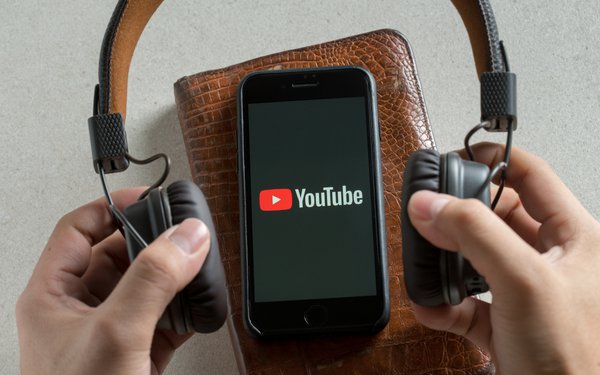
YouTube Model for TV Station Future: Podcasts, As News?


Commentary

YouTube Model for TV Station Future: Podcasts, As News?

Is YouTube a model for where TV is going -- for younger consumers to come back to more traditional-looking video screens?

Nielsen says YouTube now has a commanding lead over all streaming platforms -- at around 11% of all TV and streaming viewing.

For the better part of the last 12 months, the big Google platform has had almost nonstop growth. According to other research, 74% of U.S. adults regularly used YouTube.

We have been told for years that local TV viewership keeps getting older and older -- at least 60-65 years of age and higher -- especially for TV stations with heavy news content.

While there is certainly a mix of users, we know YouTube can attract many more younger viewers. So... should local over-the-air TV station programmers think about YouTube more when looking to the future in trying to transform their aging platforms?

System 21 will add the rock your local-direct revenue!

One area to look at is podcasts. According to one piece of research, 65% of podcast listeners under the age of 30 prefer to watch their podcast as a piece of video content. For many that means the ease of YouTube.

This makes sense when looking at all the social media mobile apps with heavy video elements. Young users, of course, can get YouTube via mobile, desktop, and increasingly the big TV screen.

The hard part is finding a way to transform local TV station news content. Are video podcasts a model?

For some time, TV platforms -- nationally and locally -- have tried to transform news content to interest young viewers, with weak results. Recent efforts includes Vice Media and Cheddar News.

There are many obstacles for TV stations. First of all, this is on-demand or near on-demand world -- not a local TV station’s main thing. It is still linear TV -- though many stations do have websites, of course, where there is on-demand content.

The good news is that young people don’t necessarily mind advertising, but they want to get to the content quickly. Think TikTok, Instagram and other social media. They want to be in control to tap into stuff, consume, and then move on.

And yet there is some hope: Google executives now report YouTube is now watched on TV more than any other device. So, let's make a somewhat fanciful leap:

Does all this mean that young users/viewers are coming back to TV?

Thursday, February 20, 2025

What 5 Million Cold Calls Reveal About Selling in 2025


What 5 Million Cold Calls Reveal About Selling in 2025

Last quarter, the Nooks sales team crushed its goal. The secret wasn’t a clever email template or gimmicky approach. They picked up the phone and had real conversations. While some teams blast automated emails – volume is up by five times in the past year – the most successful companies build 80% of their pipeline through direct conversations.

The shift back to voice isn’t just a trend; it’s a response to digital fatigue. Prospects receive hundreds of automated emails daily, but rarely engage in meaningful dialogue. Our analysis shows that when a prospect receives a thoughtful call addressing their specific challenges, they’re over two times more likely to engage compared to any other outreach method.

Sorry to Interrupt, But These Numbers Are Wild

The data from 5 million analyzed calls shows what works has fundamentally changed. Teams focusing on calls generate 40% more opportunities than those relying on automation. And successful reps don’t launch into rehearsed pitches. They ask permission to speak (2.4x higher meeting rates), reference specific customer stories (1.8x better results), and lead with problems they’ve solved for similar companies (6.3x higher conversion).

But the numbers tell only part of the story. The most successful calls share common patterns. Reps who spend the first 30 seconds listening rather than talking see double the engagement rates. Those who reference recent company news or developments show prospects they’ve done their homework. And reps who ask open-ended questions about business challenges convert at three times the rate of those who lead with product features.

Robots Can’t Connect with the Room

Despite massive investments in automation, prospects still crave human connection. When someone takes time to understand your challenges and engage in real dialogue, you notice. The best reps don’t compete with AI – they let it handle the busywork while they focus on meaningful conversations. Modern cold calling demands research, strategic thinking and genuine curiosity about customer problems.

This shift requires rethinking how we develop sales talent. The old “smile and dial” approach fails today’s sophisticated buyers. Top-performing teams now spend more time studying their market, discussing customer challenges and practicing the art of good questions than rehearsing scripts. They use technology to automate research and data entry, freeing up time for what matters: understanding customer needs and building relationships.

When Teams Dial Together, They Smile Together

Building a successful calling culture requires more than just good training. Our highest-performing teams block out dedicated time for collaborative calling sessions. They share wins and learnings in real-time. When one rep discovers an effective approach or spots a new market trend, the whole team benefits.

The data shows that teams who spend at least two hours daily in collaborative calling sessions outperform isolated callers by 60%. They’re also more likely to stick with difficult prospects, leading to our most surprising finding: 52% of all meetings come from follow-up calls, yet only 21% of reps actually make those follow-ups when asked.

Plot Twist: The Future Still Needs Humans

In the future, we’ll have even more powerful tools. Virtual reality might let reps walk through customer facilities together. AI assistants could suggest handling tricky objections in real time. But the fundamentals won’t change. People buy from people who take time to understand their needs. The future belongs to teams that master both technology and human connection.

The most successful organizations will use technology to enhance human capabilities, not replace them. They’ll automate the repetitive tasks that currently waste three hours of every rep’s day, freeing them to focus on meaningful dialogue. They’ll use AI to identify the best times to call and the most relevant talking points, but leave the actual conversations to skilled humans who can build genuine relationships.

Don’t Call It a Comeback

Reality check: While technology transforms how we work, human connection drives results. Organizations that build cultures around meaningful conversations supported by smart automation will thrive. Those that hide behind automation and treat prospects like entries in a database will fall behind.

The future of sales isn’t about choosing between technology and human touch – it’s about using each where it works best. Let automation handle the busy work. Save your people for what matters most: having real conversations that solve

YouTube Model for TV Station Future: Podcasts, As News?


Commentary

YouTube Model for TV Station Future: Podcasts, As News?

Is YouTube a model for where TV is going -- for younger consumers to come back to more traditional-looking video screens?

Nielsen says YouTube now has a commanding lead over all streaming platforms -- at around 11% of all TV and streaming viewing.

For the better part of the last 12 months, the big Google platform has had almost nonstop growth. According to other research, 74% of U.S. adults regularly used YouTube.

We have been told for years that local TV viewership keeps getting older and older -- at least 60-65 years of age and higher -- especially for TV stations with heavy news content.

While there is certainly a mix of users, we know YouTube can attract many younger viewers. So... should local over-the-air TV station programmers think about YouTube more when looking to the future in trying to transform their aging platforms?


One area to look at is podcasts. According to one piece of research, 65% of podcast listeners under the age of 30 prefer to watch their podcast as a piece of video content. For many that means the ease of YouTube.

This makes sense when looking at all the social media mobile apps with heavy video elements. Young users, of course, can get YouTube via mobile, desktop, and increasingly the big TV screen.

The hard part is finding a way to transform local TV station news content. Are video podcasts a model?

For some time, TV platforms -- nationally and locally -- have tried to transform news content to interest young viewers, with weak results. Recent efforts includes Vice Media and Cheddar News.

There are many obstacles for TV stations. First of all, this is on-demand or near on-demand world -- not a local TV station’s main thing. It is still linear TV -- though many stations do have websites, of course, where there is on-demand content.

The good news is that young people don’t necessarily mind advertising, but they want to get to the content quickly. Think TikTok, Instagram and other social media. They want to be in control to tap into stuff, consume, and then move on.

And yet there is some hope: Google executives now report YouTube is now watched on TV more than any other device. So, let's make a somewhat fanciful leap:

Does all this mean that young users/viewers are coming back to TV?