Thursday, July 25, 2024

YouTube Growth Slows: CTV, Competition Poised to Make a Dent?


COMMENTARY

YouTube Growth Slows: CTV, Competition Poised to Make a Dent?

On the surface, Google’s YouTube second-quarter results look great -- with a 13% increase in advertising revenue to $8.6 billion. But Wall Street was expecting a bit more -- like $8.93 billion.

In addition, analysts wonder whether increasing competition -- from many outside influences --  is waiting in the wings and poised to make a few dents in the big streaming video site.

The first indication of potential softness comes from the dominant Google search business itself -- a business that climbed 14% in the period.

MoffettNathanson Research says Google’s growth in search at the company has outperformed YouTube video ad growth in nine of the last 12 quarters -- and adds that this is surprising, given the age and engagement differences between the YouTube and search markets. 

There are also concerns that YouTube Shorts is not doing as well as non-Short inventory. The problem is that TikTok and Reels may remain stronger -- especially when it comes to mobile.

The good news is that YouTube has seen continued quarterly improvements since the first quarter of 2023 -- rising 2%, then 5%, 12%, 16%, and 21% -- in advertising revenues. 

An analysis seems to suggest that YouTube seeing a dip most recently to 13% could mean a change is coming.

The broader view shows the current advertising weakness in not only linear TV video advertising, but also a maturing and softening of streaming TV ad activity.

Perhaps this indicates a bigger picture -- that YouTube depends heavily on brand advertising -- upper-funnel, awareness engagement that can be particularly tough to prove out, in terms of return on media investment.

And there are new connected TV (CTV) competitors to consider going forward -- with strength in Amazon Prime Video strength and retail media.

The positive element has been core viewing results for streaming. The most recent Nielsen reading shows YouTube rising to another best result with 9.9% share of total June viewing for persons two years on older when it comes to all TV-video viewing.

Finally, there is this: Disney+ has been considering the idea of adding "user-generated content" -- core YouTube content -- to its platform, to pull in a broader range of viewers.

Seems like a big task. But getting even a small piece of  some $9 billion in potential ad revenue per quarter could be a big deal for any new legacy-owned streaming platforms’ profitability. Someone is hitting the ‘like’ button.

Friday, July 19, 2024

Android Auto is working on support for AM, FM, and HD radio

Sorry I couldn't undo my attempt to include the picture with the underscored article...but I thought you'd want to share it with your local-direct automotive clients. Philip Jay LeNoble, Ph.D.

Android Auto is working on support for AM, FM, and HD radio

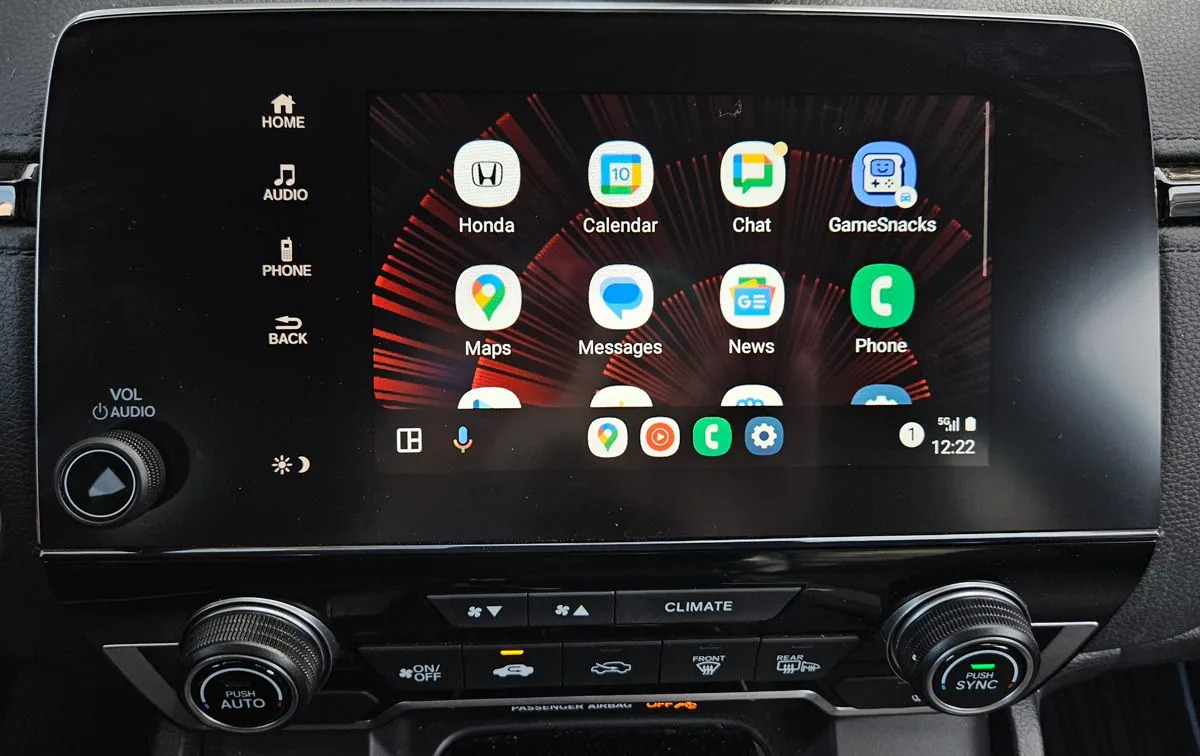
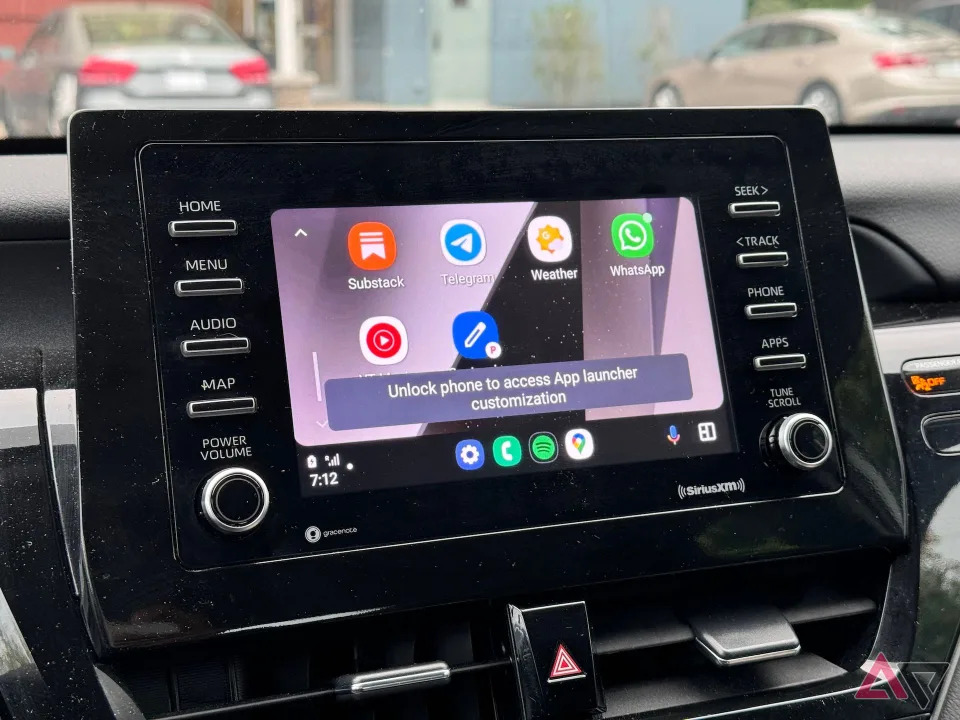
Android Auto homescreen displayed on an in-dash navigation screen
  • Android Auto is a powerful tool that really enhances the in-car entertainment experience.

  • A new update may soon bring traditional radio controls to Android Auto, giving users access to FM, AM, and HD Radio.

  • While not a top request, integrating radio controls could enhance safety and the overall user experience.

While car radios used to be in a bad place with outdated UIs and clunky software that never got updated, things changed with the arrival of Android Auto, giving users the power to upgrade their head units, just by plugging up their existing phones. Since that time, many car manufacturers have adopted Android Auto into their products, giving users a great way to keep some consistency between their phones and their vehicles.

And while Android Auto has made significant changes and added a ton of features over the years, the one thing that it still doesn't offer is connectivity to traditional terrestrial radio broadcasts. Now, for most, music streaming services like Spotify and YouTube Music are a way of life, and this kind of connectivity is the last thing on peoples' minds. But, just in case you ever wanted to, it looks like a future update could bring that type of functionality to Android Auto.

Most people won't use it, but it'll be nice to have

Android-Auto-vs-CarPlay-AP-Android4

The folks at 9to5Google did some digging into the latest version of Android Auto and found some indications in the code that hint that this feature could be in the works. One of the biggest giveaways is that there is a line of code that shows support for “Car Radio” controls, which will apparently give the app the ability to control the built-in radio with options to switch from AM, FM and even HD Radio.

As far as what it will look like, the news outlet is unclear, as it has only been able to see code strings at this point. So how it will look when it arrives is really anyone's guess. Again, while this might not be the most critical or highly requested feature by most Android Auto users, there are definitely a few good reasons to get this integrated into the UI, with safety being one of the top concerns.

Health, Wellness Brands Are Missing the Mark with Gen Z Women


Health, Wellness Brands Are Missing the Mark with Gen Z Women

The health and wellness world seems to be in a state of perpetual transformation, especially because of the influence of the diverse viewpoints and needs of various demographics, particularly Gen Z women. This consumer base has emerged as a potent influence, shaping dialogues concerning comprehensive well-being. As a generation molded by digital technology and shifting societal norms, female Gen Z audiences disrupt conventional approaches in their pursuit of health and wellness.

However, navigating the intricacies of their well-being journey poses challenges for Gen Z women as they encounter a healthcare system and brands that frequently fall short of meeting their needs. Understanding their distinct attitudes and behaviors is pivotal for brands striving to engage with genuineness and efficacy.

The Gen Z Health & Wellness Experience

Gen Z women enjoy unparalleled access to information, particularly through digital channels. They traverse a landscape inundated with health-related content, molding their perspectives on overall well-being. Yet, within this abundance of information lies a formidable hurdle: misinformation. The profusion of choices and veiled marketing content doesn’t propel female Gen Zs toward improved health. Instead, it fosters dismissiveness and bewilderment, exacerbating the anxiety prevalent in this generation.

Research by McKinsey and the 2024 World Happiness Report shows that Gen Z reports inferior mental, social, and spiritual health compared to older generations. Female Gen Z-ers are nearly twice as likely as males to report subpar mental health. 

For Gen Z women, wellness focus revolves around fitness, sleep, and overall health, signaling a yearning for a balanced approach. However, despite their active prioritization of health, Gen Z women grapple with a significant spending disparity. Independent studies have noted their relatively modest healthcare expenditures compared to their population size.  

How BrandsCan Connect With Gen Z Women

Responsibility and advocacy: Brands that actively champion better health and wellness can resonate more with Gen Z women. This might involve forming partnerships with health organizations, engaging in community initiatives, and maintaining transparent communication.

Authentic engagement: With 22% of Gen Z women anticipating health and wellness brands to connect on a deeper level, authenticity becomes crucial. Brands need to demonstrate a genuine commitment to this demographic’s well-being.

Holistic offerings: Gen Z women seek brands that acknowledge the interconnectedness of physical, mental, and emotional well-being. While it may not be feasible for a single brand to be all those things, it needs to consider the full spectrum of a woman’s health journey and strive to address multiple aspects where possible.

Leveraging digital tools: Given that 66% of Gen Z use wellness apps and fitness trackers, brands should incorporate digital health tools into their offerings. This not only meets the technological expectations but also facilitates personalized health solutions.

Mental health support: Considering the high rates of anxiety and depression among Gen Z women, brands should prioritize mental health in their messaging. Providing resources and destigmatizing mental health will forge stronger connections with this demographic.

Wednesday, July 17, 2024

Streaming Jumps to 40% of All TV Usage in June, Setting a Nielsen Record

As an ad primer.... for local-businesses to grow their ever-exhausting quest of finding out where their potential market is, we present...  Who's been watching what? Philip Jay LeNoble, Ph.D.

Streaming Jumps to 40% of All TV Usage in June, Setting a Nielsen Record

By Selome Hailu

Bridgerton. (L to R) Ruth Gemmell as Lady Violet Bridgerton, Nicola Coughlan as Penelope Featherington in episode 305 of Bridgerton. Cr. Liam Daniel/Netflix © 2024
LIAM DANIEL/NETFLIX

Streaming accounted for 40.3% of all TV usage in the U.S in June, per a monthly report from Nielsen. That marks not only the highest proportion of streaming viewership ever recorded in the three years Nielsen began tracking, but the best performance for any single category of viewership. Previously, the record belonged to cable, which reached 40.1% of TV usage in June 2021.

Netflix, largely driven by “Bridgerton” in the month of June but with several other high-performing titles, was the most-watched traditional streaming service of the month with 8.4% of all viewership, but YouTube outranked it with 9.9%.

With less than one-third of Netflix’s viewership, Amazon Prime Video trailed with 3.1%, and Hulu was next with 3%. Disney+ and Tubi each made up 2% of viewership and were followed by the Roku channel (1.5%), Max (1.4%), Peacock (1.2%), Paramount+ (1.1%) and Pluto (0.8%). 6% of viewership fell into a miscellaneous streaming category. (Note: Nielsen measures viewership on U.S. television sets. Viewership in other countries and on other devices is not accounted for here.

Four apps double-digit viewership growth compared to May — Netflix (11.8%), Disney+ 14.8%), Tubi (14.7%) and Max (11%). Each of the four owes at least 20% of its total to younger viewers, which Nielsen defines as those age 2-17. The company also points out that the growth in streaming viewership overall, which is up 6% from May, is partially attributed to young people. Viewers age 2-11 in particular watched 16% more television than they did the previous month, likely due to the end of the school year and the beginning of summer vacation.

Behind “Bridgerton,” which was watched for 9.3 billion minutes in June, “Your Honor” was the second-most-streamed title. The Bryan Cranston-led legal drama aired on Showtime from 2020 to 2023 and has long been available to stream on Paramount+, but its addition to Netflix on June 1 drove it to a total of 7.5 billion minutes watched across both platforms.

Other big titles in June included “The Boys” with 4 billion minutes watched on Amazon Prime Video and “House of the Dragon” with 3.4 billion minutes watched on Max.

It should be noted that some streaming titles split their impact across TV usage categories. For example, while most “House of the Dragon” viewership happens on Max, the series airs on HBO’s linear channel, contributing to the cable portion of Nielsen’s chart.

Cable was the biggest usage category behind streaming in June, Making up 27.2% of all viewership, cable viewing was largely boosted the presidential debate, which attracted 10 million viewers on CNN and 9.5 million on Fox news channel.

Broadcast followed cable, making up 20.5% of TV usage. ABC hosted the top seven telecasts of the month: five games in the NBA finals plus another debate simulcast and Game 7 of the NHL Stanley Cup Finals. NBC’s airing of the women’s gymnastics Olympic Trials was the No. 8 broadcast telecast of the month, with NBC sure to rise in the rankings in July and August due to the Olympic Games.

12% of TV usage fell into a miscellaneous other category.

Amazon Prime Day: Ad Spend Contributes to An Estimated $14B Consumer Spend Online

 Recently, I went shopping at our local Best Buy to look for a new toaster oven and cordless and bagless vac. All the salesperson showed us was pictures of what they could get with nothing in stock to satisfy our immediate needs. No doubt I and my wife were a bit taken back as the store seems to have changed from its neighborhood installation years ago of having everything most consumers need to buy! So, where did we go to get what was in our immediate needs box? You guessed it! Amazon! They filled the order promptly and we received it in a relatively quick timetable. If local stores can't provide needed products as we move further into the middle of the 21st Century, the local shopping experience is in for a big change, affecting jobs and local economies!  Philip Jay LeNoble, Ph.D.

Amazon Prime Day: Ad Spend Contributes to An Estimated $14B Consumer Spend Online

On the first day of Amazon Prime Day brands bought ads, and consumers showed their loyalty to brands by purchasing lots of products.

Adobe Analytics data released Wednesday shows the impact of marketing dollars spent during the first day of the Amazon Prime Day event.

Across major marketing channels, social networks saw the biggest lift at 16% when it came to revenue contribution.

Display ads also got a lift in revenue share, rising 12.5%. Affiliates and partners, which includes influencer marketing, was another major contributor, up 9.8%, while paid search lagged rising a mere 6.2%.

Consumers spent $7.2 billion on July 16, the first day of the Prime Day event. This represents 11.7% growth year-over-year (YoY) and marks the single biggest ecommerce day in 2024.

It also marked the biggest mobile shopping day of the year, so far, contributing $3.5 billion in online spend. It represents 49.3% share versus desktop shopping.    

Based on Adobe Analytics data, the analysis covers more than one trillion visits to U.S. retail sites, 100 million SKUs, and 18 product categories.

Adobe estimates consumers will spend $14 billion online across the two-day event, growing 10.5% year-over-year (YoY) during the two-day Amazon Prime Day event, setting a new record.

This comes after a strong year so far for ecommerce, where consumers have already spent $502.9 billion online from January 1 to June 30, 2024, up 7.4% YoY.

In the next 3 months -- from July 1 through September 30, 2024 -- Adobe is forecasting $229.1 billion in online spend, up 7.2% YoY. 

On the first day, online sales were driven by electronics, which rose 33% compared with the average daily sales in June 2024. The greatest influence came from headphones while bluetooth speakers jumped 164%. Televisions rose 83%; fitness trackers, 81%; tablets, 71%; e-readers, 65%; and computers, 64%.

Video games rose 134%, while small kitchen appliances were up 82%; perfume and cologne, up 49%; and power tools, 37% higher.

Back-to-school spending also got a boost, with spend up 210% on July 16 compared with daily sales levels in June 2024. Popular products included backpacks, lunchboxes, and stationery.


Deloitte: Back-to-School Spending Likely to Fall 2%


BACK-TO-SCHOOL

Deloitte: Back-to-School Spending Likely to Fall 2%


Just as companies like Instacart, Target and JC Penney are announcing their back-to-school campaigns, Deloitte has some not-so-great news. The consulting company’s forecast predicts that parents -- worried about family finances -- are pulling back this year. It says spending will be $31.3 billion, or approximately $586 per student. That represents a decline of about 2% from last year’s $31.9 billion.

Consumers say they are sifting through prices and priorities. Clothing, as always, gets the biggest bite of BTS budgets and is expected to be flat at $12.6 billion. Tech comes next, with spending expected to fall 11% to $8.6 billion. School supplies are also expected to be flat at $7.4 billion. What is up, though, is spending in the “other” category, expected to jump 22% to $2.2 billion. That category is a catchall for purchases like furniture and personal hygiene.

Those expenses are in addition to the money 86% of families intend to lay out for extracurricular activities. This year, that expense is $582, including fees and equipment.

Parents are looking for bargains everywhere, with mass merchants being the overwhelming favorite at 77%, followed by 65% who will shop online. And 48% intend to shop on Amazon Prime Day. On average, parents plan to visit 4.7 retail formats, up from 3.9 in 2023.

They also feel more efficient, saying they intend to finish at least two-thirds of BTS shopping by the end of July.

"We expect back-to-school spending to be flat to down modestly when adjusted for inflation, mainly driven by middle-income families juggling financial priorities and ongoing inflation perceptions,” says Stephen Rogers, managing director, Deloitte Insights Consumer Industry Center, in a release. “Retailers can expect headwinds to volume and loyalty as consumers seek to save money. However... retailers will likely have opportunities to harness the indulgences parents are willing to make [to please their kids.]"

That means brands and retailers will be fighting extra hard this year, already launching ads that appeal to every flavor of parents. Target has those bargain hunters in its sights, with BTS and back-to-college promotions that include a basket of 20 must-have supplies, like glue, notebooks and colored pencils, for under $20. It also has a $5 backpack, which is the lowest price in over 10 years.

The Minneapolis-based retailer is also offering deals on subscriptions for Target Circle 360, including $5 per month for verified college students, $11 per month for all consumers, and a limited promotion for teachers, who can buy the annual subscription for $49 for the first year. The company is also extending previous discounts that have won fans over, including a one-time 20% off college student appreciation discount and a one-time 20% discount for teachers.

JCPenney is also targeting frugal parents, including a Black Friday in July event, with thousands of clothing items priced at $20 or less. The Plano, Texas-based department store chain also has a Super Saturday event in early August and Power Penney days scheduled for later in the month. Members of its loyalty program also get a free photo session and digital image at JCPenney Portraits by Lifetouch.

Other brands are skipping the saving message and going straight for the schmaltz. Instacart just debuted a back-to-school effort showing parents making time for the milestones that really matter, like teaching kids to tie their shoes or shave their legs.

The ads, created in-house, are running on linear TV, OTT, and YouTube, as well as on NBCU’s Summer Olympics portfolio – the brand’s first appearance during the Games. Instacart is also partnering with 11 CPG brands, including PepsiCo, J.M. Smucker, Mondelez and SC Johnson.

Pure-Play AI Ad Spending Accelerating


Pure-Play AI Ad Spending Accelerating

In a new, comprehensive nearly 200-page report, analysts at New Street Research outline how AI is influencing almost every facet of the ad industry -- from creative to ideation to media and marketing analytics.

And while they downgraded the initially bullish estimates for ad-supported AI agents, they estimate pure-play AI enabled experiences will surge to billions of dollars over the next few years -- at least initially due primarily to its impact on search -- especially Google's AI Overview ads.

"We expect AI Overview advertising to generate $17 billion by 2027," the New Street Research analysts forecast in the just-published report, "The ROI on Gen AI Primer."

The analysts estimate Google AI Overview advertising revenue will be $1.7 billion in 2025, $6.7 billion in 2026 and $16.9 billion in 2027.

While the report does not provide search ad-spending estimates for other generative AI players, it does cite advertising and/or hybrid advertising/subscription models for Bing Copilot, Snap and Perplexity, and describes Meta AI's model as "not available."

The only significant downgrade in AI ad spending expectations is for ad-supported AI agents developed by Snap and Meta, which New Street originally earmarked would take in billions by 2025 (see chart above).

While the pure-play AI experience ad spending still is nascent, the report reaffirms broad ad industry sentiment that the technology is accelerating the transformation of almost every facet of the ad business.

It even cites GroupM's recently released estimate that 70% of all advertising already is influenced by AI, and that nearly 100% will be by the end of the decade.