Thursday, August 10, 2023

NewsGuard Begins Rating CTV, OTT News Channels


NewsGuard Begins Rating CTV, OTT News Channels

NewsGuard, a pioneer in the field of rating the reliability of news and information sources in digital media and linear TV, this morning announced the rollout of a "reliability ratings" service covering top connected TV (CTV) and over-the-top (OTT) news channels.

The CTV reliability ratings utilize NewsGuard's team of analysts assessing trust scores on a scale of 0-to-10 rating overall risk level, metadata fields, as well as a detailed written explanation of a channel's content and credibility practices.

The service is aimed at advertisers and agencies and is similar to one NewsGuard created for linear TV networks and programming that was chartered by IPG Mediabrands in 2021.

The CTV ratings service has already rated 41 channels across CTV/OTT covering more than 900 shows.

CTV channels are rated based on the following weighted criteria specific to the television medium, which have been  adapted from nine basic, apolitical criteria of journalistic practice NewsGuard applies to news and information websites:
  • Does not repeatedly convey false information (4 points): This network or program does not regularly allow clearly false facts of significant importance to be conveyed by the on-air talent or an interviewee in a way that is unchallenged by other on-air talent or another interviewee.
  • Conveys news on important topics responsibly (3 points): This network or program rarely if ever conveys unchallenged false facts, presents unsubstantiated claims as fact, or distorts or misrepresents information regarding important issues.
  • Presents multiple viewpoints (2 points): When the on-air talent or guests offer opinions on significant issues, care is generally taken by this network or program to present alternative viewpoints.
  • News organization associated with this program adheres strongly to journalistic standards (1 point): The website of the network that airs this program passes all NewsGuard’s credibility criteria.

Sample CTV Reliability Ratings and Nutrition Labels are publicly available for the following streaming news channels: Scripps News, which scores 10/10, The Young Turks, which scores 4/10, and CGTN, a global network operated by the Chinese government's Propaganda Department, which scores 0/10.

Summer Production Halt Means No Fall Shows For TV Columnists


Summer Production Halt Means No Fall Shows For TV Columnists

A production crisis brought on by the Hollywood writers’ and actors’ strikes has left a void in an annual rite of summer for the nation’s TV columnists.

It is the yearly midsummer previewing of the new fall shows, which are traditionally made available sometime after the May upfronts.

They are only the pilots, and they come with cautionary notes and advisories on the emails from network publicists.

Unless I missed them somehow, I have seen no emails this summer guiding me to the pilot screeners.

The p.r. reps almost always point out that, by their nature, these pilots are works in progress. Sometimes, they undergo changes before they are ready to be presented as series’ premieres.

These can include tweaks, reshoots, post-production enhancements, and even occasionally, the recasting of a prominent role.

For this reason, the emails also request that the shows not be reviewed in their midsummer, pilot form. 

The networks usually provide access to the finished, ready-to-air versions of the shows much closer to the start of the fall season. 

On all of this, I have long been willing to play along. For many years, I have put off writing “official” reviews of any of the pilots until a few days in advance of their premiere dates in September, October and sometimes beyond.

However, in some years, when watching the works-in-progress pilots in the summer, I have written TV Blogs in August -- right about now, as a matter of fact -- that I position, somewhat cheekily, as “previews,” as opposed to “reviews.”

Whether or not I try and sneak some opinions into these “previews,” I do enjoy watching the fall network pilots every summer to get my own preview of what’s in store.

Perhaps more importantly, these previews do result in a number of midsummer TV Blogs at a time of year when the supply of new shows grows fallow. 

Indeed, in my experience, the two months in which program premieres are scarcer than at any other time of the year are June and August.

Since discussions of new content are often the lifeblood of the TV Blog, a paucity of programs can be a challenge.

The dramas and comedies that were announced in May and supposed to premiere this fall -- but are now on indefinite hold -- number about 12 (give or take) spread over the four broadcast networks.

Thus, I am going this whole summer without seeing the new “Matlock” coming to CBS and starring Kathy Bates. 

In addition, I will not get to sample “Elsbeth,” the CBS spinoff of “The Good Wife” and “The Good Fight” that is centered on one of the attorney characters from those shows, Elsbeth Tascioni, played by Carrie Preston (pictured above).

Another missing CBS show is “Tracker,” the new drama about a lone wolf survivalist who tracks down missing people for law enforcement.

NBC’s new dramas are also MIA -- “The Irrational,” starring Jesse L. Martin as a crime-fighting expert in human behavior, and “Found,” about a crusading p.r. specialist who also tracks down missing people.

An even bigger loss to TV columnists everywhere is the absence of the NBC comedy “Extended Family” starring Jon Cryer. 

Fox’s new dramas that will not be seen until who-knows-when are “Rescue: HI Surf,” about lifeguards in Hawaii, and the medical drama “Doc,” which was previously the title of a 1970s sitcom and a drama series of the early 2000s.

Only ABC had the apparent good sense last May to refrain from promising scripted shows by this fall because the writers’ strike had already begun on May 2. The actors followed in July.

Please do not feel too badly for the TV columnists who will have to muddle through the dog days of August without the fall pilots to keep us company.

Somehow, I always come up with something, including the occasional TV Blog about some inside-baseball situation that affects only TV columnists.

Married.... With Networks: Nexstar CEO Says It Has The Next Fox TV


Married.... With Networks: Nexstar CEO Says It Has The Next Fox TV


Does CW now look like a model to become a new Fox Network?  And if so, what kind of animal might be a reference point?

Nexstar Media Group CEO Perry Sook says CW's current growth -- in terms of overall weekday programming as well as its sports portfolio -- is on a path similar to Fox.
But is this Fox 1.0 or 3.0? 

Consider that when Fox started out in the late 80s, cable TV networks were still tiny network operations in comparison to still-strong broadcast network platforms. There was room to experiment.

In the mid-1980s, Fox had almost no sports. It wasn't until 1993 that Fox got the NFL, and then in 1995 Major League Baseball. During those years, analysts believed Fox overpaid for those big sports franchises -- which turned out to be the right content bets.

Right now, The CW is not really in that spending mode -- de-emphasizing pricey scripted TV entertainment programming and replacing it with non-scripted content -- especially now in the current environment, with dual writers' and actors' strikes.

And if that were not enough, there is much more competition for The CW now compared to 50 years ago. Traditional cable TV networks are still on the scene -- more than 200 channels in addition to a wide range of premium digital channels and streaming to contend with.

Sports programming for CW? It has ACC football/basketball and LIV Golf Tour, which may not be around its present form -- especially if it goes ahead and completes its merger with the PGA Tour. Even those are not the big sports franchises that Fox had to pay for to make its mark.

From a entertainment perspective, Fox early on also dipped into edgier programming with shows like "Married... with Children," "21 Jump Street," "Beverly Hills 90210," “"House," and other TV series.

A controversial, outspoken heritage still lingers at Fox Corp., although not necessarily on Fox Television Network these days -- more with Fox News Channel. 

So that brings us full circle to Nexstar, identifying key value efforts to build its company out with national TV platforms. This would be building out news content -- from its local TV stations into NewsNation, a streaming subscription TV platform. Now Nexstar is looking to do more with The CW.

Is this the connection Nexstar is more broadly looking at, but in reverse? Fox started an entertainment network first (Fox Television Network in the mid-1980s) and then launched a cable TV news network in 1996 -- the Fox News Channel.

Fox's national TV network push came from its ownership of TV stations. Nexstar is the largest independent owner of U.S. TV stations.

Perhaps CW needs a new brand name -- a la Fox -- that speaks more strongly about its transformation. Factor in "cougar," "jaguar," or "chimp" if needed. Your favorite retro-animal name mashup goes here.

Monday, August 7, 2023

ChatGPT Site Traffic Continues to Fall Worldwide


ChatGPT Site Traffic Continues to Fall Worldwide

Web traffic to OpenAI’s ChatGPT sites continues to fall. Worldwide traffic to chat.openai.com fell 9.7% in June and 9.6% in July. In the U.S., ChatGPT traffic fell 15% in June, then another 4% in July, according to Similarweb.

One thought by analysis from Similarweb is seasonal. School is out, which could cause a dip in traffic. Chegg, an online learning platform that provides educational resources, has seen traffic to its website drop in the past couple of months.

Similarweb cannot make a definitive analysis for the drop in Chegg’s web traffic, because its rival Course Hero has been trending down, too, since early 2022, before the arrival of OpenAI’s chatbot.

Traffic to chegg.com fell 16.8% year over year in May 2023, when college students are expected to look for help studying for finals. It also was down 19.1% in May 2022, months before the introduction of ChatGPT. In April, Chegg announced the CheggMate AI assistant, built with OpenAI’s GPT-4 model.

Similarweb estimates that college-age individuals make up more than one-quarter of the adult audience for ChatGPT. About 28.6% in the U.S., and 27% worldwide.

About 33.50% of the U.S.-age bracket between 35 and 44 use CHatGPT, followed by 28.61% for ages 18 to 24, and 15.90% for ages 34 to 44. It drops to 11.19% for ages 45 to 54%, and 6.51 for ages 55 to 64, and 4.20% for those age 65 and older.

When measuring worldwide traffic, ChatGPT receives more visits than Microsoft’s Bing search engine.

Similarweb estimates 1.47 million visits in July for chat.openai.com, compared with 1.2 million for Bing. The margin, however, continues to widen. The data suggests that some AI chat users may have migrated to Bing, which is powered by the same OpenAI algorithms.

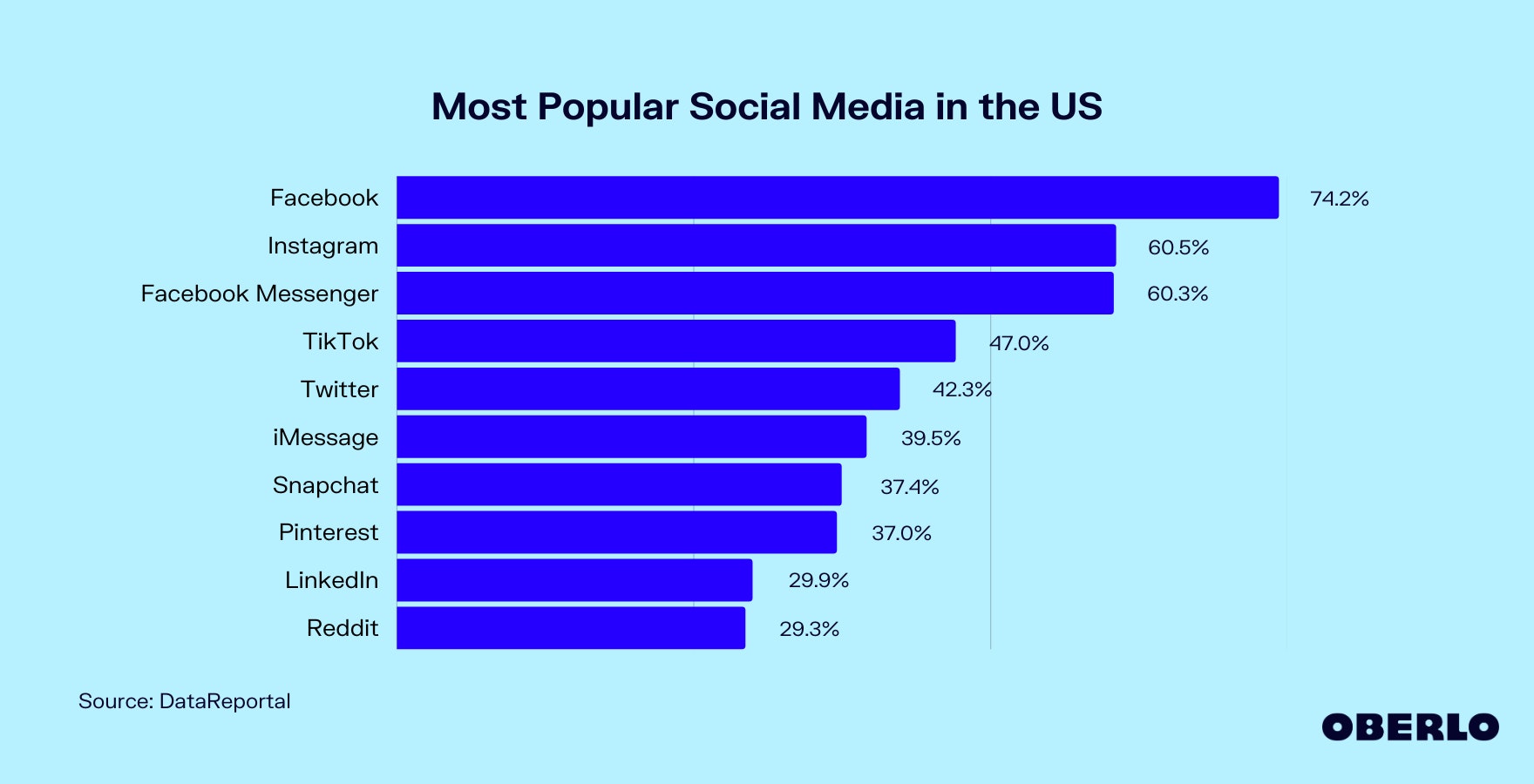
Is Social Media Still Important for Local TV Audience Development?


U.S. Credit Rating Downgrade: How It Affects Advertising


U.S. Credit Rating Downgrade: How It Affects Advertising

The Fitch Ratings agency last week announced that it would downgrade its long-term credit rating of the United States from AAA to AA+ with a stable outlook. It forced the stock market rally to take a breather, and drove up interest rates in the housing market.

This is not the first time Fitch has downgraded the U.S. rating. It happened in 2011 under the Obama administration. But some who represent advertising agencies said it is not quite the same circumstances.

Although it has not been determined how the downgrade will affect the advertising industry, as companies and brands make decisions about which media to buy and where to spend budgets, some look back to the last downgrade in 2011 to share opinions.

"There's no simple answer," said Kevin Lee, founder of several companies including Didit, a digital marketing and technology firm. "The main risk is that it continues to drive up interest rates, which indirectly slows marketing investments, since some businesses borrow money to grow."

That could have a "chilling effect on ad spend," he said, pointing to the amount that companies spend on branding and awareness.

Tim Daly, founder of the marketing agency Vincodo, noted that there was no impact in 2011, but digital marketing was in the early stages of adoption. He does not anticipate a major concern unless consumers' confidence slips as a result of the downgrade.

Paul Darling, NP Digital CFO, called the downgrade a "macro-economic decision" that many people may not have heard about or understand. "I don’t think this decision on its own will have any meaningful impact on advertising and marketing spend," he said. "Moody's also said that U.S. treasury bonds are still the safest asset on the planet. If anything, any impact from this will be further down the road, rather than immediate."

Darling said that other economic indicators and factors, both positive and negative, may have a greater influence on consumers and companies in terms of spending. Current consumer behavior is contradictory to what might be expected.

Positive economic indicators point to rising stock markets, low unemployment, increased wages and some signs of lower inflation.

Darling says these indicators present a more bullish outlook for consumers and for NP Digital's clients and brands that continue to spend on marketing and advertising.

The one caveat is an increase in interest rates. That is one change that hits closest to home for most consumers and adds to the high inflation experienced during the past 12 months, although it has come down a bit. This has all led to decreased consumer sentiment, Darling said. 

"I have no doubt that this has caused advertisers to be more cautious on how and where they spend, and perhaps more so, especially for the small and medium-size businesses whose priority is to preserve cash flow," he said. "So, I don’t think the latest downgrade will make a huge difference to how advertisers will behave, but we will continue to see some element of caution from our clients similar to what we have been experiencing in the past six to nine months."

Automotive TV Spending Down 3.8% In July


Automotive TV Spending Down 3.8% In July


Automakers spent an estimated $90.2 million on national TV in July, down 3.8% compared to $93.7 million in July 2022.

Impressions, at 27.0 billion, were up 14.5% for the month compared to 24.4 billion a year ago, per iSpot.tv.

The top five brands by estimated national TV spending were Subaru ($11.6 million), Chevrolet ($9.8 million), Kia ($7.7 million), Ram Trucks ($6.7 million) and Lexus ($6.5 million).

Subaru upped its estimated July national TV ad spend by 20.3% year-over-year, with an increase during morning shows including Good Morning America (+236.1%) and Today (+93.6%) compared to July 2022. 

Chevrolet also spent more this year (+32.3%) compared to July 2022, with a 47 times year-over-year increase in estimated spend during House Hunters. The brand also aired ads during the Open Championship golf tournament this year (after not doing so last year).

Automakers continue to align ad creatives with the summer season, highlighting how the latest vehicles are made for warm weather plans, says Stuart Schwartzapfel, EVP, media partnerships at iSpot. 

“While live sports provided opportunities for broad consumer ad reach in July, the bigger story was how many automakers invested more in news, informational and reality programming – offering a possible sign of what we’ll see this fall should entertainment work stoppages continue,” Schwartzapfel tells Marketing Daily

The top five brands by share of automaker household TV ad impressions in July were Chevrolet (11.20%), Subaru (7.93%), Toyota, (7.81%), Lexus (6.65%) and  Nissan (6.53%).

The biggest estimated spending increases among top 15 brands by spend for the month vs. a year ago were Alfa Romeo (new vs. July 2022) with estimated spending for July 2023 of $4.0 million. Other increases were Acura (+983.9%), Ram Trucks (+57.1%), Volkswagen (+51.3%) and Chevrolet (+32.3%), per iSpot.tv.

Alfa Romeo continued its summer 2023 spending spree into July (the automaker did not air ads in June or July 2022), with the entirety of its $4 million outlay directed toward a spot promoting the Tonale vehicle. The brand focused significant portions of spend across cable networks AMC (12.5% of its total outlay) and HGTV (10.7%). 

Much of Acrua’s increase in outlay was fueled by SportsCenter, which comprised 13% of the automaker’s estimated spend in July 2023 (the brand did not air ads during that program in July 2022). Acura also increased its investment in reality programming in July by 34x year-over-year. 

Volkswagen, meanwhile, leaned on soccer: 25% of the automaker’s total July 2023 national TV ad spend went toward soccer tournaments – including the 2023 CONCACAF Gold Cup and the FIFA Women’s World Cup, representing a 427% year-over-year increase in spend on the sport, per iSpot.tv.

The top programs for automakers by share of household TV ad impressions in July 2023 were  PGA Tour Golf (1.57%), SportsCenter (1.01%), MLB (0.86%), House Hunters (0.71%) and Today (0.57%),

In July, automakers more than doubled national TV ad impressions across SportsCenter year-over-year and had a 48.8% increase in impressions during the Open Championship (part of the PGA Tour Golf total above) compared to last July. 

Even more notable is the industry’s 314.3% year-over-year increase in impressions during House Hunters on HGTV. Automaker ad impressions during the Wimbledon Championships also climbed 92.2% vs. July 2022. 

The top networks for automakers by share of household TV ad impressions in July 2023 were NBC (3.23%), HGTV (2.34%), ABC (2.08%), Univision (1.85%) and CBS (1.81%), per iSpot.tv.

The most-seen automaker ads by share of household TV ad impressions for the month was Ram Trucks: Opportunity (3.11%), Alfa Romeo: Our Heritage (2.45%), Kia: Bird’s Eye View (2.17%), Chevrolet: Blazer EV and Barbie (2.07%)  and Chevrolet: Stay Connected, Safe and Charged (2.04%), per iSpot.tv.