Tuesday, March 17, 2026

The Future of Local Advertising Depends on Convergence, Not Channels


TV News Check 


Broadcast Industry News - Television, Cable, On-demand


OPEN MIKE

The Future of Local Advertising Depends on Convergence, Not Channels

Mar 17, 2026| Keith Kazerman| 

Locality’s Keith Kazerman: The industry needs an audience-based strategy that reflects how people watch, consume, search and buy in local markets.

As AI reshapes the media landscape, local advertising is facing a moment of opportunity, and a big one. On one hand, geotargeted video, behavioral data and real-time optimization open powerful new possibilities. On the other hand, advertisers face the growing challenge of aligning these capabilities across multiple environments and platforms.  

The problem isn’t a lack of industry innovation; it’s a lack of foundational integration. What is increasingly clear is that integration across identity, planning, activation and measurement will be critical if local campaigns are to operate as seamlessly as audiences consume media.

Understanding The Viewer

Today’s viewers shift seamlessly between platforms. A consumer might watch morning news on broadcast, stream their favorite series on an app and browse clips on mobile, all in a single day. But advertisers trying to reach that viewer must navigate different datasets, vendors and planning tools, each with its own rules, measurement reporting and blind spots.

The result? Many local campaigns are still forced to operate in silos, planned separately, delivered inefficiently and measured unevenly, despite the availability of better data. This creates a missed opportunity. The technological systems supporting local advertising were built for a different era. 

The Case for an Audience-First Infrastructure

To move forward, we need more than incremental tools. It requires a shift in orientation, from channel-based planning to an audience-based strategy that reflects how people watch, consume, search and buy in local markets.

An audience-first framework recognizes that broadcast, streaming, mobile and digital platforms are not competing but interconnected touchpoints within a broader consumer journey. It prioritizes consistent measurement, cross-platform duplication and transparent reporting so that advertisers can understand beyond the number of impressions that were delivered to how they contributed collectively to campaign objectives.

This does not diminish the value of any individual platform. Broadcast continues to deliver scale, trust and deep community engagement in local markets. Streaming and digital environments provide flexibility and targeting precision that enhances relevance. Each plays a distinct and important role within the same audience journey. 

Greater alignment across platforms and measurement standards will allow advertisers to better understand how these environments work together and reflect how people consume media.

Smarter Local Activation

Local media has always delivered deep relevance; it connects with communities in a way national campaigns can’t replicate. But when that value is unlocked through better audience understanding, local advertising becomes even more powerful. 

With more integrated data, advertisers can build more complete strategies using broad linear reach to drive awareness, then tailoring follow-up messages through digital and streaming to drive consumers through the purchase funnel. Regardless of channel, it’s about reaching the right people at the right time with the right message.

This is not simply a matter of coordination. As artificial intelligence and advanced data modeling continue to mature, the industry has an opportunity to improve frequency management, enhance attribution and create clearer visibility into cross-platform performance at the local level.

Laying The Groundwork for What’s Next

The future of local advertising won’t be defined by individual channels. It will be driven by technologies that serve the audience first, regardless of where they are. The entire ecosystem — broadcast, streaming, mobile and digital — is interconnected, requiring a shared data foundation, openness in measurement and alignment across platforms.

Advertisers who rethink how they approach local, starting with the consumer and data that defines their behavior and not just the delivery channel to reach them, will be best positioned to lead. As audience behavior continues to shift across screens, success in local advertising will depend less on channel selection and more on coordination.

When planning and measurement frameworks reflect how people actually consume media, advertisers gain a more complete view of performance. Convergence is an evolution of consumer behavior, and if done right, it will drive greater ROI and stronger long-term growth.  

When local strategies are built around audience behavior and actual consumers, rather than platform distinctions, it’s no longer a question of broadcast or streaming but how to unlock the full potential of both.

Nielsen Report: Radio Still America’s Top-Reaching Medium.

 Something for our radio clients from a great radio resource, Inside Radio: Philip Jay LeNoble, Ph.D

 Inside Radio


Nielsen Report: Radio Still America’s Top-Reaching Medium.

  •  Updated 
  •  
Microphone

Radio remains the most widely consumed audio platform in the United States and continues to deliver massive reach and strong advertising performance, according to “Audio Today 2026: How America Listens,” a new report from Nielsen.

The study finds that radio reaches 93% of all U.S. adults each month, making it the top-reaching media platform in the country. That reach extends across demographics, including 93% of Black consumers and 94% of Hispanic consumers. Even among the hard-to-reach 18-34 audience, radio reaches 89% of the population.

Year after year, the report says, radio continues to reach more Americans than any other platform — including smartphones, connected TVs, personal computers and tablets.

The medium also dominates ad-supported audio listening. According to Edison Research’s Share of Ear data cited in the report, radio accounts for 55% of daily ad-supported audio listening among adults 18+. Podcasts account for another 21%, while ad-supported streaming audio captures about 15% of listening time.

Taken together, radio and podcasts represent more than 80% of all ad-supported audio consumption.

Radio’s strength is particularly pronounced in the car, where it captures more than 80% of all ad-supported listening time. The report notes that nearly three-quarters of out-of-home radio listening during weekday morning and afternoon drive occurs in vehicles.

That positioning places radio at a critical moment in the consumer journey — when audiences are commuting, working or shopping and are often closer to making purchase decisions.

Network radio programming also continues to play a major role in the medium’s reach. Nielsen data shows that more than 93% of radio listeners tune to a network-affiliated station each week. That share rises to 96% among both Black and Hispanic audiences, underscoring the role syndicated programming plays in expanding radio’s national footprint.

Despite radio’s reach and engagement, the report highlights a significant perception gap among marketers. According to Nielsen’s Global Annual Marketing Survey, many advertisers rank radio near the bottom in perceived effectiveness compared to other channels.

However, performance data tells a different story. Nielsen’s Global Compass benchmarks show radio delivers one of the highest returns on investment among major media channels, trailing only social media in global ROI performance.

That mismatch between perception and performance may lead advertisers to underinvest in radio, even though the medium consistently delivers strong audience scale and cost efficiency.

The report also emphasizes the growing strategic value of combining radio with podcast advertising, particularly when targeting younger consumers.

For adults 18-34, radio alone reaches nearly 89% of the population. Adding podcast advertising increases total reach to more than 94%, bringing audio campaigns close to full population coverage.

The findings suggest that an integrated audio strategy combining radio and podcasts can help marketers maximize audience reach while improving campaign performance.

Nielsen also recommends several best practices for incorporating radio and other audio channels into marketing mix models, including ensuring sufficient advertising weight, analyzing delivery at the market level, and using actual as-run data rather than planned campaign estimates.

Ultimately, the report concludes that while the media landscape continues to evolve, radio remains a dominant force in American media consumption — delivering unmatched reach, strong engagement and measurable value for advertisers.

In an era defined by fragmented digital attention, the report suggests radio’s enduring strength lies in its daily habit: reaching millions of Americans across the workday, the commute and the moments when consumers are closest to making purchasing decisions.

Auto Dealerships Under Fire for Advertising Practices


Just a bit of news you may wish to share with your client dealers to let them know what's important int he advertising game today: Philip Jay LeNoble, Ph.D.

Auto Dealerships Under Fire For Advertising Practices

The Federal Trade Commission is putting dealership groups on notice that their advertising practices must fall in line with federal law.

“The agency announced on March 13 that it has dispatched letters to nearly 100 dealership organizations, cautioning them against what it describes as six specific ‘illegal pricing practices,’” according to GM Authority. “These include advertising a price that fails to include mandatory fees, conditioning advertised prices on dealer financing, and marketing unavailable vehicles."


Inline Jumbo Banner_Web-Email.png3:16.png 640 x 480


The only costs dealers may omit from an advertised price, the FTC wrote, are “required government charges, like taxes.”

“The letters stress the need for truthful and transparent pricing in the automotive industry,” according to WardsAuto. “The warning letters note FTC actions are pending against three dealer groups accused of one or more of the illegal pricing practices, but otherwise do not identify specific dealer groups.”

Shopping for a car and feeling like the price magically changes at checkout is a familiar experience for some Americans.

“According to the FTC, dealerships should make sure advertised prices reflect the full cost customers must pay, aside from government charges like taxes,” according to CarScoops.  “The agency says it’s keeping an eye on the marketplace and could take enforcement action if misleading pricing practices keep popping up.”

The agency said it had not concluded that each dealer that received a warning was engaged in these practices.

“The move partly replicates an abandoned Biden-era effort to rein in ‘junk fees’ in car shopping,” according to Kelley Blue Book. “Under the prior administration, the agency wrote a proposed federal rule that would have made those same practices illegal. It failed a court challenge on technical grounds, with a judge finding that the agency had not provided the public sufficient notice of its plans.”

OAAA Reports OOH Advertising Rose 3.6% In 2025


OAAA Reports OOH Advertising Rose 3.6% In 2025

Out of home (OOH) advertising revenue reached a record $9.46 billion in 2025, up 3.6% year-over-year growth and extending the industry’s growth to 19 consecutive quarters, according to newly released data from the Out of Home Advertising Association of America (OAAA).  

Momentum accelerated in the fourth quarter, with revenue increasing 4.8% versus the prior year period.   


Inline Jumbo Banner_Web-Email.png3:16.png 640 x 480


Digital out-of-home (DOOH) remained a key driver of industry growth, accounting for 36.3% of total OOH revenue and increasing 10.5% year over year. Transit emerged as the fastest-growing segment for the second consecutive year, rising 9.2% last year. 

Seventy percent of the top 100 OOH advertisers increased spending compared to 2024, according to the OAAA analysis. 

OAAA publishes estimates based on data from sources including Miller Kaplan and MediaRadar as well as public member company reporting. Estimates include spending across digital and static billboards, street furniture, transit, place-based, and cinema advertising. 

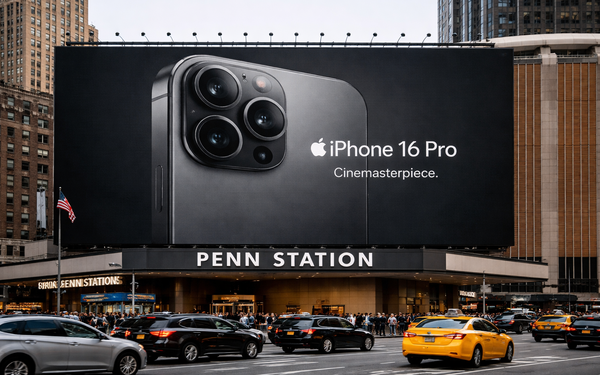
The top 10 OOH advertisers last year were Apple, Morgan & Morgan, Vivint, Verizon, Repipe Specialists, Coca-Cola, McDonald’s, Disney, T-Mobile and Amazon.  

The top 10 OOH ad categories were legal services, hospitals/clinics, consumer banking, hotels/resorts, colleges/universities, computer software, fuel suppliers/plumbing/HVAC services, quick service restaurants, local government and telecom. 

Want To Tap into The Longevity Boom? Start By Prioritizing Women's Health


Commentary

Want To Tap into The Longevity Boom? Start By Prioritizing Women's Health

As we enter Women’s History Month, this can’t just be another moment for virtue-signaling by brands. If you’re going to talk about helping women live longer, better lives, your innovation and investments need to reflect a tangible commitment to real issues.

Many brands are rushing to ride the longevity wave with new product lines and services, but they’re overlooking an important fact: Women already live longer than men. Yet they aren’t experiencing longevity as a triumph but a burden, spending more time in bodies that aren’t understood.

Globally, women are estimated to spend about 25% more of their lives in poor health than men, yet only around 5% of global R&D funding is dedicated to women’s health, leaving areas like menopause, cardiovascular disease, autoimmune disorders and chronic pain dramatically under-researched.

There are green shoots on the horizon. As longevity has shifted from a billionaire fantasy to an everyday project, women are taking ownership of their health -- piecing together GLP-1s, hormone therapy and sleep tech in pursuit of a better later life -- and driving the majority of family healthcare decisions.


So why aren’t more longevity investments designed around women’s needs? If brands are serious about longevity, they can’t just sell aspirational years at the end of life; they have to help improve the quality of the years women are already getting.

From “bikini medicine” to real issues

For women, the gap between a long life and a healthy one is rooted in inequalities in the medical system.

For decades, women were excluded from clinical trials or treated as a niche subgroup; only in the 1990s did policy begin to require their routine inclusion.

Those gaps still show up as women being dismissed and misdiagnosed. Cardiovascular disease is still framed as a “man’s problem,” even though women face comparable risk, and women are about 50% more likely than men to be misdiagnosed when they’re having a heart attack.

This history has given rise to “bikini medicine”: women’s health defined largely by the parts a bikini would cover, with a disproportionate focus on pregnancy and reproduction even though non-communicable diseases are the leading causes of illness and death in women.

Any brand that wants to talk credibly about helping women live longer should start by acknowledging that they are doing so against a backdrop of decades of under-research, misdiagnosis and frustration.

From virtue-signaling to real support

It starts with widening the lens. Too much of the current “longevity” conversation still defaults to appearance, bouncing back after 40 or vague promises of “feeling like your younger self,” layered on top of the same products.

A more honest brief asks: What actually steals healthy years from the women you serve, and what can you do about it? That might mean reformulating food and drink around satiety and metabolic health, building strength and recovery support designed around women’s hormonal realities, or financial planning around caregiving stretches.

Women have lived through enough hype cycles to know when they’re being sold a fantasy. Ground any longevity claim in plain-spoken science and realistic outcomes.

This Women’s History Month, challenge yourself to commit to one small change in improving women’s health — whether it’s funding research into underdiagnosed conditions or profiling products that ease menopause symptoms. We don’t need more campaigns telling us we’re powerful; we need brands to do the unglamorous work that will give us more good years.

Monday, March 16, 2026

Commentary Marketing In the Age Of AI: Why Earning Trust Still Beats Chasing Technology

 Since we are in the beginning of artificial intelligence in advertising, how will the local direct businesses use it to help impact consumers in their marketplace and how will station management help teach reps who will be calling on these businesses begin to understand how the use of AI will help influence consumer choices? Philip Jay LeNoble, Ph.D.

Commentary

Marketing In the Age Of AI: Why Earning Trust Still Beats Chasing Technology

Artificial intelligence has been a dominant theme in marketing discussions for years, but 2026 marks a critical shift. Brands are no longer debating whether to use AI. They are grappling with how AI is changing the way decisions get made, not just how campaigns get executed.

Yet amid the automations, efficiencies, and new platforms lies a paradox too few marketers are addressing. As AI becomes more integral to discovery and evaluation, human trust and clarity matter more, not less.

From Automation to Interpretation

AI’s earliest role in marketing centered on efficiency, taking on tasks like generating content, predicting behavior, and optimizing spend. That focus is evolving. Today, AI increasingly mediates how buyers find, compare, and shortlist brands before any human interaction occurs.

This creates an underexamined challenge. AI does not simply process content; it interprets it, summarizing, contextualizing and presenting a version of your brand as a direct answer to a question. In many cases, that AI-generated summary is the first, and sometimes only, introduction to a brand a buyer gets.


Which means marketing is no longer just influencing perception. It is shaping what AI finds easy to explain with confidence.

Where Many Brands Go Wrong

Most marketers respond by producing more content -- more blogs, campaigns and messages across more channels.

But AI does not evaluate brands by volume.

It forms an opinion by identifying a small number of authoritative explanations. These include core pages, clear descriptions of what a company does, who it is for, and how it is different. AI then checks whether those explanations are consistent and credible.

When those signals are unclear, fragmented, or overly promotional, AI fills in the gaps -- often imperfectly.

This is where strong brands can still be misunderstood -- not because they lack activity, but because they have not made their story easy for machines to summarize accurately.

How Marketers Can Adapt

So how can brands market more effectively in an AI-mediated world?

First, prioritize explainability over volume. Make sure a small set of core pages clearly and consistently answer fundamental questions about your brand. If a human, or an AI, cannot summarize what you do in a few sentences, that is a signal worth fixing.

Second, structure for interpretation. Content should not only sound good to people. It should be organized so machines can confidently extract meaning. Clear headings, unambiguous language, and well-defined relationships between ideas matter more than clever copy.

Third, reinforce authority beyond your own channels. AI systems rely heavily on third-party validation. Earned media, expert commentary, and credible references do more than build human trust; they help AI decide what to believe.

Trust Still Wins, But It Has to Be Legible

This is not about choosing between AI and human-centered marketing. AI amplifies what is already there.

If your marketing reflects clarity, consistency, and genuine credibility, AI will reflect that back to the market. If it does not, no amount of automation will fix the gap.

In an environment where AI increasingly shapes first impressions, the brands that win will not be the loudest or the most automated. They will be the ones that make trust and meaning easy to identify and understand.


This post was previously published in an earlier edition of Marketing Insider.

Commentary Real-Time Marketing Isn't About Being Fast -- It's About Being Ready

 What are we helping local-direct clients to accomplish with their advertising brand before they hit the air with their message? Here's a little marketing strategy that seem to have an anchor in not only what the message is, but what the local business has to show the helps differentiate it from other businesses in the same game: Philip Jay LeNoble, Ph.D.

Commentary

Real-Time Marketing Isn't About Being Fast -- It's About Being Ready

For marketers, the possibility of viral success is almost intoxicating.

Over the course of mere minutes, it seems like your brand could achieve near-universal reach and encode in people’s memories in ways your typical media buy could never deliver.

Remember Super Bowl 2025? Pringles and Little Caesars both unveiled big-budget commercials featuring the exact same CGI gag: facial hair taking flight. The coincidence was so absurd it almost became bigger than the game. Then Little Caesars posted on Instagram, asking Pringles to “make it official,” and consumers ate it up. Real-time marketing at its finest.

Equally true, though far less exhilarating: Countless brands offer their own real-time responses during Super Bowls, too. And they get nothing. No virality, no coverage, no lasting impact.

Ironically, that selective amnesia is exactly what makes real-time marketing wins feel so accessible, even though they’re rare. We’re wired to remember the spectacular exception, not the mundane rule.


When a single brand nails a cultural moment, it burns into our memories—leading us to believe viral moments are achievable if we’re just fast enough with a clever quip. Compounding the sense of urgency, every other marketing team seems to be chasing the same dream, pouring brand budgets into “moment readiness” and always-on social presence.

All that activity just distracts from something fundamental: The brands that succeed at harnessing cultural moments aren’t playing the speed game at all.

How “Instant” Success Actually Happens

Here’s the reality of real-time marketing. The brands that win show up as themselves when the moment aligns precisely with how they already live in consumers’ minds.

Consider Heinz’s response to viral videos of restaurants refilling the brand’s bottles with generic ketchup. Instead of a rushed social post, they took time to develop an entire campaign: Pantone-matched labels that served as authenticity tests. They turned a potential crisis into a brand-building moment by being strategic, not panicked.

Or think back to the story that started it all: Oreo’s tweet during the 2013 Super Bowl blackout. “You can still dunk in the dark” grew into such powerful marketing lore, claiming credit for it became a pickup line in NYC advertising circles. But it was Oreo’s decades of brand-building as “the cookie you dunk” that actually made the moment unforgettable.

To Own the Moment, Get Methodical

The hardest truth about real-time marketing is that most moments won’t matter. Most clever posts won’t travel. And that’s exactly as it should be.

Because while everyone else exhausts themselves chasing lightning, patient brands are doing the deeper work: building distinctive assets, owning emotional states, embedding behavioral triggers that work whether it’s the Super Bowl or a random Tuesday.

So the next time someone suggests building a war room for moment marketing, ask them this: “What if we spent that energy becoming the brand people think of before there’s lightning to bottle?”

Invest in claiming those mental territories: the satisfying after-school snack, the fun Friday night delivery order, the soothing shift from work mode to weekend.

When you’ve built that true mental availability, you don’t need to chase virality. You’re ready when opportunity arrives—and who you are makes the moment.

Living Room Video Ad Blinking? YouTube Tops 4 Legacy Companies


Living Room Video Ad Blinking? YouTube Tops 4 Legacy Companies

YouTube's yearly advertising revenue is now higher than four major legacy companies -- Disney, NBC, Paramount and Warner Bros. Discovery -- at $40.4 billion a year ago, according to MoffettNathanson Research.

Does that make those big TV advertising brands blink... a bit? Those four major TV-centric media companies are at $37.8 billion per year -- and declining.

Still, YouTube has some distance to go to surpass all legacy TV networks, stations, and platforms in total advertising at around $60 billion per year, depending on the estimates.

Even then, as Ed Papazian from Media Dynamics notes, many of those YouTube advertising deals are not in competition with legacy TV network advertisers -- the big-spending brands.

The difference may still come down to perceptions of content: premium versus not-so-premium.


The former is a description of content still attached to legacy media’s long-form half-hour, hour or longer produced scripted or unscripted content.

YouTube still largely consists of the now old-school term -- user-generated content.

And in that content-analysis for YouTube, there remain other persistent issues.

For many, buying YouTube for hesitant major brands is still be a “brand safety” thing -- even with improved Google-owned AI monitoring.

Add to that transparency issues over the specifics of a media deal are still cleared with legacy media versus continued “walled garden” of Google -- where other digital first streamers have the same issues.

In addition, there is a still positive significant reach value for TV, when it comes to broad-base attention, brand awareness, and other metrics.

Finally, there needs to be a discussion of other issues of measurement -- still not entirely on a like-to-like comparison when analyzing gross rating points versus impressions, clicks and other data.

The bottom line is: rough estimates put big TV brands' spend at 60% to 70% of their video budgets using top of-the-funnel TV platforms with around 30% to 40% for digital platforms. And a big piece of later going to YouTube.

But note all this is still fluid state -- for the future: Young Gen Zers love YouTube -- a nearly 80% "favorability" number compared to other social media platforms.

With that as a prelude to the future, should we mull what this kind of “favorability” means when it comes to analysis in sizing up YouTube versus traditional live, linear TV stuff?

Would that sway more brands to pull more money from TV?

Concerns Arise Over Local Ad Inventory With NFL, Other Sports League Deals


Commentary

Concerns Arise Over Local Ad Inventory With NFL, Other Sports League Deals

Soon the NFL will start up new negotiations -- under its existing option of its five long-term 11-year TV deals with networks and streamers.

Analysts believe that league executives could be looking for as much as a massive 50% increase in revenue.

There is a concern that the result would be to peel off some existing games to be sold to existing or new streaming platforms.

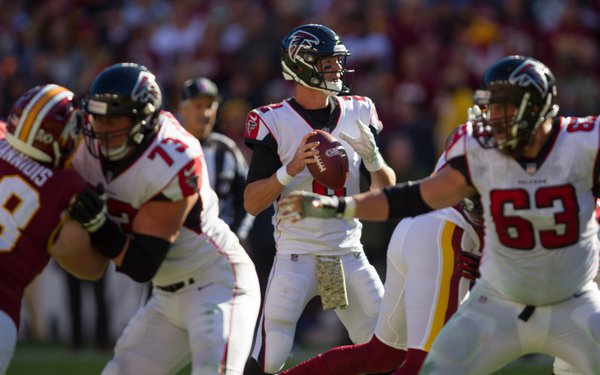
Netflix secured two exclusive Christmas Day games over the last two years. Then Amazon Prime Video signed a multi-year deal to get exclusive playoff games over the last couple of seasons.

It seems that now, YouTube TV (already with the NFL Sunday Ticket) is angling for a new five-game package.


This has some concerned that there may be more to come -- although it would not have much effect on national TV over-the-air broadcast networks that are still secure with their deals.

Down the line, the concern is what it might mean -- especially for local TV advertising inventory for TV affiliates owned by big, independent station groups including Nexstar Media Group, Sinclair, Tegna and Gray Media, among many others.

For the NFL, there is not much concern. The league requires that over-the-air broadcasters get to air local market teams that are playing. For this, the NFL gets an antitrust exemption under the Sports Broadcasting Act.

It is a bit of a different story for the NBA, NHL, and Major League Baseball -- which air many more games. This has increased with the slow demise of regional sports cable networks like Main Street Sports Group (formerly the big Diamond Sports Group’s Bally Sports RSNs),

Now some station groups have made local deals -- especially with the MLB and NBA. For example, Gray, Tegna, Scripps, and Nexstar do more sports as a result.

But there are other things going on: For example, ESPN started a deal with MLB.tv to air "out of market" games starting with the 2026 season.

In addition, the NBA has been in active talks with YouTube TV, Amazon Prime Video, ESPN, and DAZN to create a centralized streaming service for “in-market” games. As many as 22 NBA teams could be involved.

All this is intended to create a new kind of ‘national-local’ hub viewers may be attracted to.

At the same time, those leagues are also sensitive to "antitrust" concerns (especially the NFL) where teams are hedging -- and some are making deals with TV station groups while also forging streaming deals.

Some NBA teams have this, including the Phoenix Suns, Utah Jazz, New Orleans Pelicans, Portland Trail Blazers, Dallas Mavericks.

For local over-the-air TV stations, they get to hold or improve their access to premium live sports inventory. But for how long?